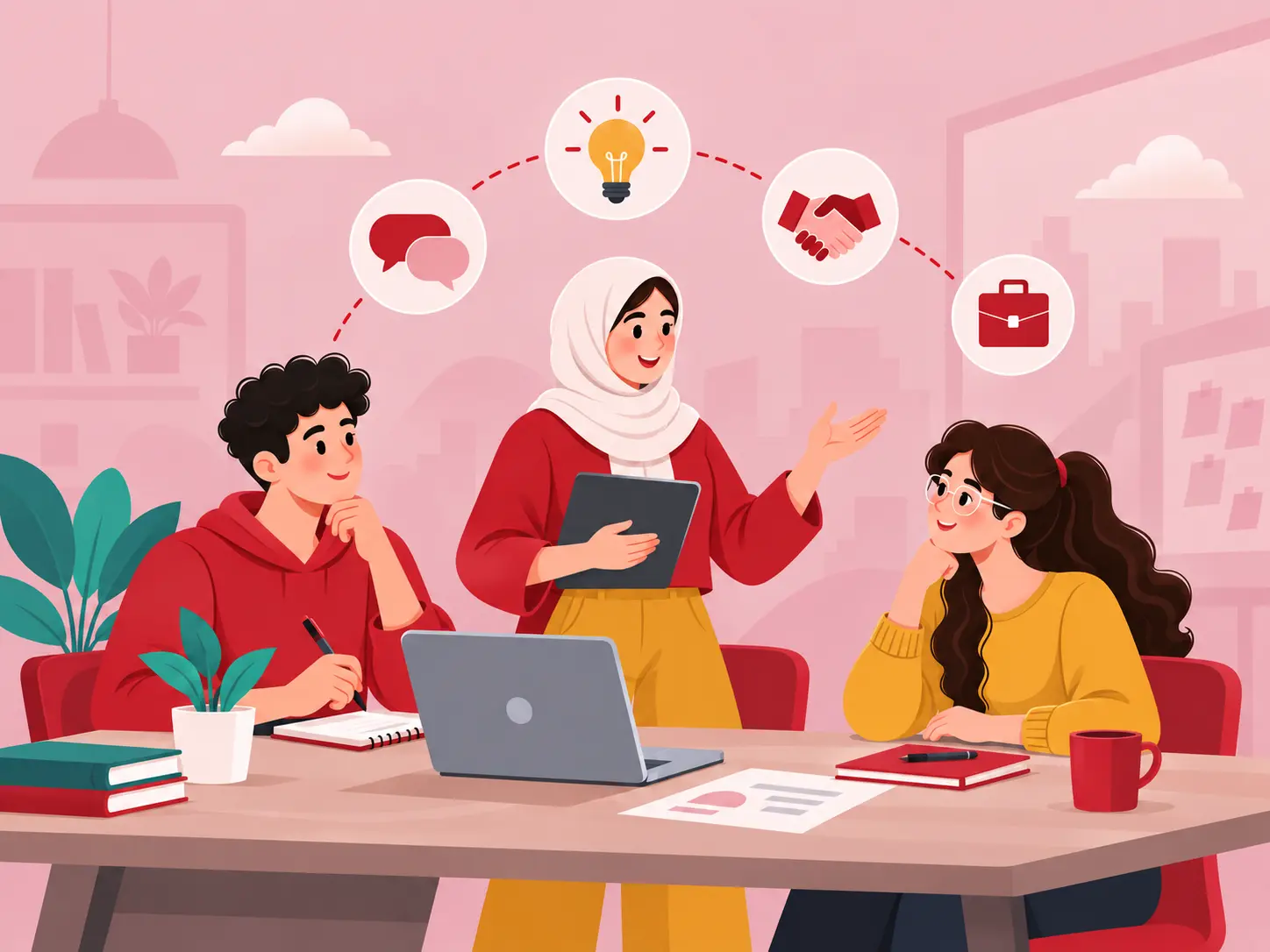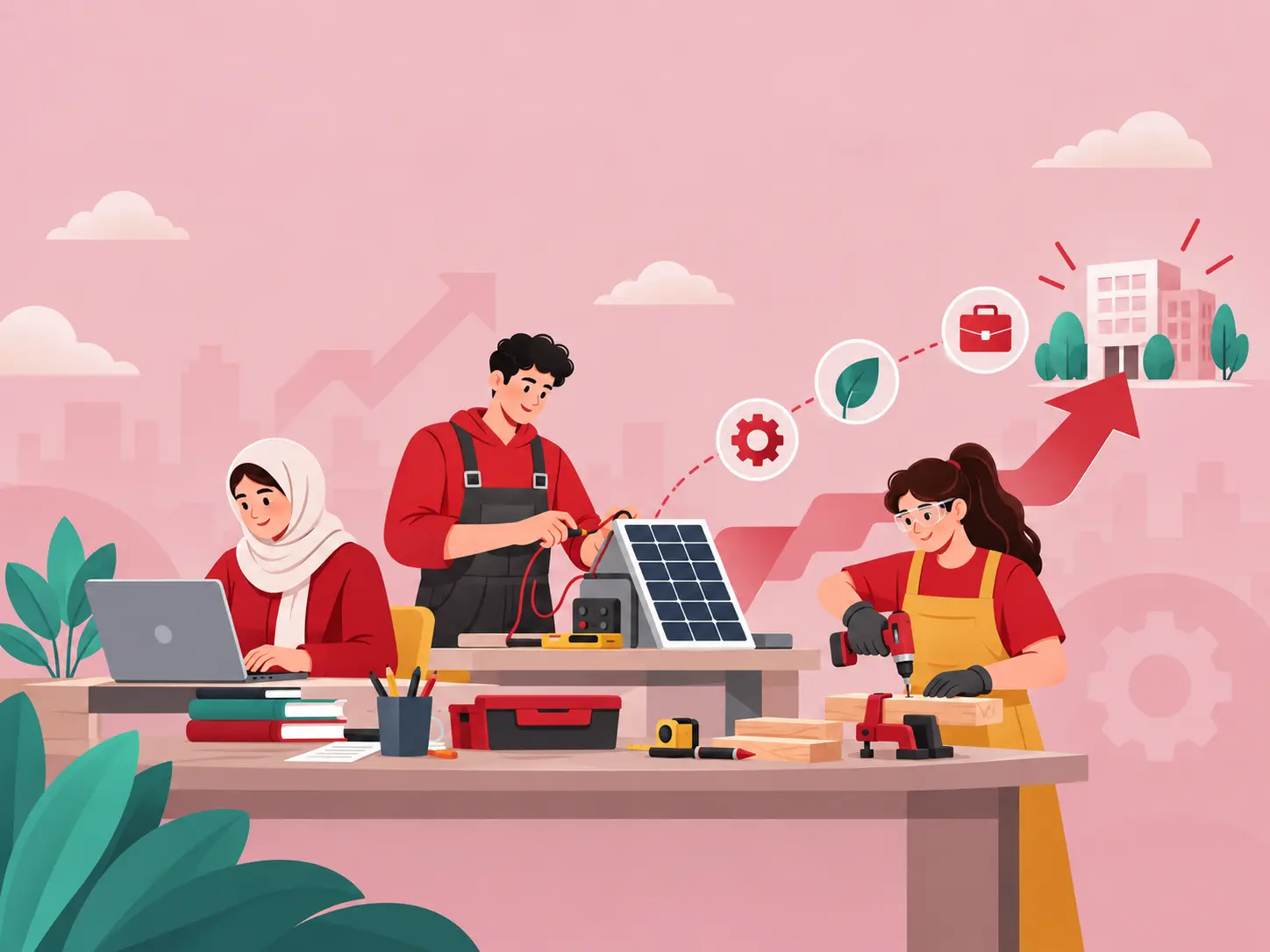
For more than a decade, war and displacement have interrupted the education and career journeys of millions of Syrian youth. Many left school before completing high school, and even those who stayed in the classroom often graduated into economies with few available jobs. At the same time, entire sectors, from construction and renewable energy to logistics and digital services, are searching for skilled workers to help rebuild what conflict destroyed. This mismatch between talent and opportunity is exactly where vocational training pathways make the difference.
At Jusoor, we believe Syrian youth already carry the determination and potential to succeed. What many need is a structured route into real, dignified work. Through our Career Development Program (CDP), we design vocational, green, and digital training tracks that connect learning directly to employment, freelancing, and entrepreneurship. In this blog, we explore why vocational training matters now more than ever, how our newest initiative brings training and income closer together, and how you can support the next generation of Syrian professionals.
Key insights:
- Over 7,000 schools have been damaged or destroyed in Syria, leaving about 2 million children out of school, according to UNICEF.
- Syria's reconstruction could cost as much as $216 billion, according to a World Bank assessment, creating urgent demand for skilled workers.
- Youth unemployment across the Levant remains among the highest in the world, reaching 47.8 percent in Lebanon in 2022, according to the International Labour Organization.
- Our Skills to Work program is training 250 young Syrians across vocational, green, and digital tracks in five cities inside Syria.
- Vocational training pathways succeed when skill-building is paired with direct employer connections, mentorship, and support for freelancing or small business.
Why Vocational Training Pathways Matter for Syrian Youth Today
More than a decade of conflict has left deep gaps in Syria's education and labor systems. According to UNICEF, over 7,000 schools have been damaged or destroyed, and about 2 million children remain out of school. Many young people who reach adulthood carry unfinished education and few formal qualifications, even though they are talented, resourceful, and eager to work.
At the same time, the scale of what needs rebuilding is enormous. A World Bank assessment estimates that Syria's reconstruction will cost $216 billion, covering housing, infrastructure, and public services. Sectors such as construction, renewable energy, logistics, and digital services are already short of skilled workers, and this gap will only widen as reconstruction moves forward.
Displacement adds another layer of difficulty. Across the Levant, young Syrians face restricted work permits, discriminatory hiring practices, and, in host countries such as Lebanon, extremely high unemployment. Lebanon's youth unemployment rate reached 47.8 percent in 2022, according to the ILO, nearly double the adult rate. Vocational training pathways respond directly to this reality, connecting practical, market-relevant skills to real jobs, apprenticeships, and income-generating opportunities rather than generic upskilling with no clear destination. This is why our Career Development Program (CDP) was built around one guiding question: how do we move a young Syrian from a skill to a livelihood?
Skills to Work: A Practical Model for Vocational Training in Syria
Our newest CDP initiative, Skills to Work, in collaboration with Glocal Shift and Abdul Aziz Al Ghurair Refugee Education Fund, was created to answer that question directly inside Syria. Over 12 months, the program takes 250 young Syrians across Damascus, Rural Damascus, Aleppo, Latakia, and Homs through three tracks, vocational, green, and digital, matched to sectors where demand for workers is real and growing.
We follow a simple three-step approach:
- Skill-up: Participants build technical and employability skills in their chosen track, alongside CV writing, interview preparation, and digital communication.
- Match-up: We connect participants to employer partnerships, internships, and one-on-one coaching so training leads to a real opportunity.
- Link-up: Participants receive support to launch freelancing careers or small businesses, including guidance on digital work platforms and entrepreneurship basics.
Skills to Work builds on earlier CDP groundwork that piloted the same train, connect, and enable model with a strong focus on reaching women and displaced participants. Encouragingly, women make up 57 percent of participants across our Career Development Program, evidence that vocational training pathways can open doors that have historically been harder for young women to reach.
Green and Digital Tracks: Expanding What Vocational Training Means
Vocational training pathways are no longer limited to traditional trades. The green track within Skills to Work prepares young Syrians for the renewable energy transition, including solar installation and sustainable construction. The digital track builds capabilities in freelancing, e-commerce, artificial intelligence tools, data analytics, and digital marketing, opening access to the global online economy without requiring young people to leave their families and communities.
This expanded approach connects to two other CDP projects. Our Future Skills initiative introduces adolescents to critical thinking, problem-solving, and digital literacy early on, building a stronger foundation before young people reach a vocational track. Jusoor Elkom, our remote talent pathways project, then connects qualified young professionals with employers abroad for remote roles that do not require relocation. From early skill building, through vocational and digital training, to sustained employment.
From Training to Employment: Stories of Change
Numbers only tell part of the story. Hussein Alfadawy came to our Career Development Program’s Future Skills Project and left with the skills and confidence to secure employment, a journey we shared in full in Hussein Alfadawy: Computer Literacy to Employment. Stories like his are why we measure success not only in training hours completed, but in jobs secured, incomes increased, and futures reshaped.
This same philosophy guides our work inside Syria through Bridges to Syria, our initiative to invest directly in Syria's education and workforce development as the country enters a new chapter. Vocational and workforce training has been repeatedly identified as one of the most urgent needs for young Syrians ready to contribute to rebuilding their own communities, and we intend to keep meeting that need.
How You Can Support Vocational Training Pathways for Syrian Youth
Vocational training pathways succeed because of a community effort. If you are an employer, you can help by offering apprenticeships or internships to graduates of our Skills to Work and Jusoor Elkomtracks. If you have professional experience to share, you can provide training with Jusoor and help deliver modules directly to young Syrians. Entrepreneurs can also connect with our Entrepreneurship Program to mentor graduates building their own ventures. If you would like to fund a training seat, you can donate to Jusoor and support a young Syrian's path from skill to sustainable work.
Frequently Asked Questions
What is vocational training and why does it matter for Syrian youth?
Vocational training equips young people with practical, hands-on skills for specific trades and sectors, from construction to digital marketing. For Syrian youth, it offers a faster, more direct route into employment than traditional academic pathways alone, particularly for the millions whose education was interrupted by conflict and displacement.
What vocational tracks does Jusoor's Skills to Work program offer?
Skills to Work offers three tracks: vocational, green, and digital. The vocational track covers hands-on trades and technical skills, the green track focuses on renewable energy and sustainable construction, and the digital track builds skills in freelancing, e-commerce, and digital marketing.
Who is eligible for Jusoor's vocational training pathways?
Eligibility varies by project. Skills to Work is designed for young Syrians aged 18 to 35 living inside Syria, with women and displaced individuals especially encouraged to apply. Jusoor Elkom serves Syrian and Levantine talent, including Palestinians from Syria, across the wider region.
How does vocational training lead to actual employment?
Our programs follow a train, connect, and enable model. After building technical and employability skills, participants are matched with employer partnerships, internships, and job opportunities, and receive ongoing support to pursue freelancing or start their own small businesses.
How can I get involved in supporting vocational training for Syrian youth?
You can support our vocational training pathways by donating to fund a training seat, volunteering as a trainer, offering an internship or apprenticeship at your company, or partnering with us as an institutional supporter. Visit our Get Involved page to learn more.
Conclusion
Vocational training pathways are not simply about teaching a skill, they are about restoring dignity, agency, and a sense of future to a generation of Syrian youth who have already shown remarkable resilience. Through Skills to Work, Future Skills, Jusoor Elkom, and Tech Elevation Pathways, our Career Development Program builds a continuum of training that leads directly to employment, freelancing, and entrepreneurship, inside Syria and across the region.
We cannot do this alone. Whether you choose to donate, provide training, hire a graduate, or simply share this blog with someone who can help, your support turns a training pathway into a sustainable career. Visit jusoor.ngo to learn more about our Career Development Program and help us bridge the opportunity gap for Syrian youth.