Across the Levant and Türkiye, and increasingly inside Syria itself, young people are earning degrees, certificates, and technical training in record numbers. Yet many still struggle to secure their first job, or to keep advancing once they are hired. The reason is rarely a lack of technical knowledge alone. Employers consistently report that what separates one talented candidate from another is a set of less visible strengths: the ability to communicate clearly, collaborate within a team, adapt to change, and solve problems under pressure. These are soft skills, and they are becoming central to how the modern labor market decides who gets hired, promoted, and retained.
For Syrian youth navigating displacement, economic uncertainty, and a rapidly changing job market, soft skills are not a luxury. They are a bridge between qualification and opportunity. In this blog, we explore why soft skills matter more than ever, which ones employers value most, and how our Career Development Program (CDP) and related initiatives help young Syrians build the confidence and capabilities they need to compete and succeed in today's workforce.
Key Insights:
- Soft skills, not technical qualifications alone, increasingly determine who gets hired and promoted.
- The World Economic Forum's Future of Jobs Report 2025 finds that thirty-nine percent of core workplace skills are expected to change by 2030, making adaptability and lifelong learning essential.
- Young people in the Middle East and North Africa remain three times more likely than older workers to be unemployed, according to UNICEF.
- Communication, teamwork, adaptability, problem-solving, and emotional intelligence rank among the most in-demand soft skills for job-seekers today.
- Our Career Development Program, Jusoor Elkom, and Career Mentorship Program equip young Syrians with job-ready soft skills through training, mentorship, and real pathways into work.
Why Employers Increasingly Prioritize Soft Skills
The labor market young people are entering today looks very different from the one their parents knew. Automation and artificial intelligence are reshaping entire industries, and technical knowledge that feels current now may be outdated within a few years. According to the World Economic Forum's Future of Jobs Report 2025, thirty-nine percent of the key skills required in the job market are expected to change by 2030. Alongside technological literacy, the report highlights creative thinking, resilience, flexibility, curiosity, and leadership as the human skills employers say will matter most in the years ahead.
This shift matters because technical skills can be taught relatively quickly, while soft skills take sustained practice to develop. An employer can train a new hire on a specific software platform in days. Teaching someone to communicate under pressure, manage their time, or work productively within a diverse team takes far longer. As a result, hiring managers increasingly treat soft skills as a baseline requirement, not a bonus, particularly for entry-level candidates who have limited work experience to draw on.
The Soft Skills That Matter Most for Today's Job-Seekers
While every industry has its own priorities, several soft skills consistently appear at the top of employers' wish lists.
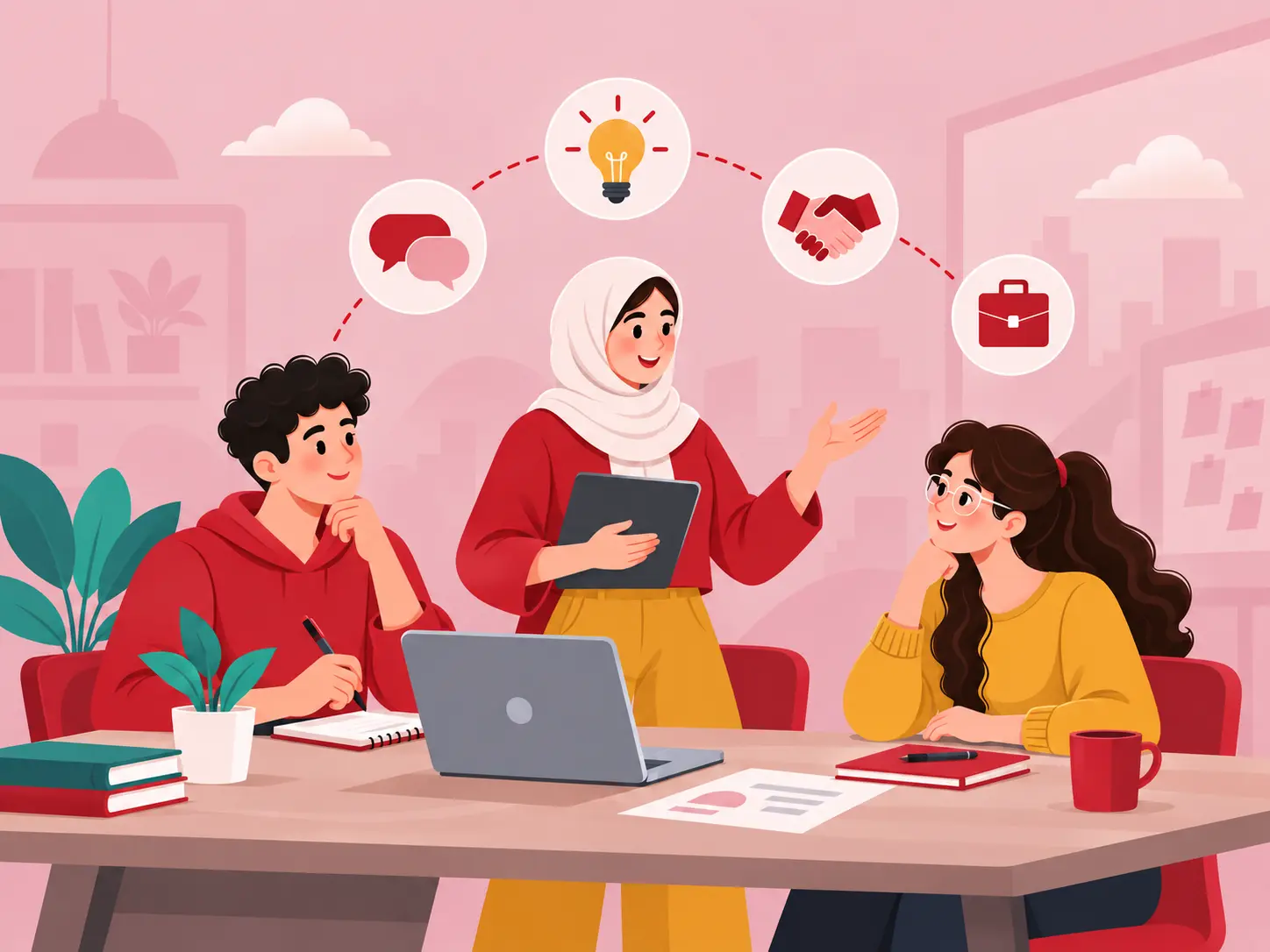
Communication. The ability to express ideas clearly, listen actively, and adjust tone for different audiences remains one of the most requested skills across every sector, from customer service to engineering.
Teamwork and collaboration. Most workplaces organize around cross-functional teams. Learners who can contribute constructively, share credit, and navigate disagreement respectfully stand out quickly.
Adaptability. Given how fast industries evolve, employers want candidates who welcome new tools, processes, and feedback rather than resisting change.
Problem-solving. The capacity to analyze a challenge, weigh options, and propose a workable solution signals initiative and critical thinking, two qualities that are difficult to teach on the job.
Emotional intelligence. Understanding one's own reactions and reading the needs of colleagues and clients builds trust, a quality that is especially valuable in client-facing and leadership roles.
Time management and reliability. Meeting deadlines and following through on commitments may sound basic, but it is consistently cited by employers as a differentiator among early-career hires.
The Employment Landscape Facing Syrian Youth
Talented and motivated as they are, Syrian youth face a labor market shaped by conflict, displacement, and economic disruption, and young women face even steeper barriers to entering the workforce, according to UNICEF. Many learners complete their education with strong academic records but limited exposure to workplace norms, professional networks, or structured feedback, the very experiences that build soft skills organically for young people elsewhere.
This gap is not a reflection of ability. It is a reflection of opportunity. Syrian youth bring resilience, adaptability, and determination shaped by circumstances few of their global peers have faced. What they need is not persuasion that they are capable, but intentional, community-driven programming that translates that capability into the specific competencies employers are looking for.
How We Help Young People Build Job-Ready Soft Skills
We designed our Career Development Program (CDP) around exactly this need. Through career coaching, workshops, and structured training, we equip young Syrians with twenty-first-century skills, including communication, teamwork, adaptability, and workplace professionalism, alongside the technical training that opens doors in growing sectors.
Our Career Mentorship Program pairs learners with professionals who provide guidance, feedback, and exposure to real workplace expectations, helping participants practice the interpersonal skills that classroom learning alone cannot teach. Through Jusoor Elkom, our remote talent pathways initiative, we connect trained young people directly with employers seeking reliable, well-prepared remote talent, giving participants a chance to apply their skills in live, professional settings. Our Future Skills initiative goes further, combining digital literacy with the collaborative and problem-solving skills young people need to thrive in a connected economy, while our Entrepreneurship Program helps aspiring founders build the leadership and resilience skills required to launch and scale their own ventures.
Across every program, our approach is community-driven and tailored to the realities young Syrians face, whether they are pursuing employment, freelancing, or entrepreneurship.
Practical Ways Young People Can Start Building These Skills Today
Developing soft skills does not require a formal course alone. Young people can begin strengthening these capabilities immediately through consistent practice. Volunteering, participating in group projects, and seeking regular feedback from mentors are all effective ways to build communication and teamwork skills. Practicing mock interviews, such as the guidance in our article on mastering job interviews, helps learners translate their strengths into confident, concrete answers. Reading practical career guidance, like our ten tips to master your career and get promoted, can also reinforce habits that employers notice early. Joining our Talent Community connects young people with opportunities, peer support, and ongoing professional development designed specifically for Syrian and displacement-affected youth.
Frequently Asked Questions
What are soft skills, and why do employers care about them?
Soft skills are interpersonal and self-management competencies, such as communication, teamwork, adaptability, and problem-solving. Employers care about them because they determine how effectively someone collaborates, learns, and performs under real workplace conditions, qualities that technical skills alone cannot guarantee.
Which soft skills are most valuable for young job-seekers in 2026?
Communication, teamwork, adaptability, problem-solving, emotional intelligence, and time management consistently rank among the most valued soft skills, particularly as employers navigate rapid technological and economic change.
Can soft skills be learned, or are people simply born with them?
Soft skills can absolutely be learned and strengthened through practice, mentorship, and structured training. Programs that combine coaching, feedback, and real workplace exposure are especially effective at accelerating this growth.
How does the Career Development Program help young Syrians build soft skills?
Our Career Development Program combines career coaching, professional workshops, and mentorship with technical training, giving participants structured opportunities to practice communication, teamwork, and problem-solving in preparation for the workforce.
What is the difference between soft skills and technical skills?
Technical skills, sometimes called hard skills, refer to specific, measurable abilities such as coding, accounting, or graphic design. Soft skills refer to how a person applies those abilities in practice, including how they communicate, collaborate, and adapt within a team.
How can I demonstrate soft skills during a job interview?
Use specific examples from school, volunteer work, or past roles to show how you communicated under pressure, resolved a conflict, or adapted to a new challenge. Concrete stories are far more persuasive to employers than general claims.
Conclusion
Soft skills have become one of the clearest predictors of who gets hired, who advances, and who builds a lasting career, and Syrian youth have the talent, determination, and adaptability to excel once given the right support to develop them. Through our Career Development Program, Career Mentorship Program, Jusoor Elkom, and Future Skills initiative, we are committed to equipping young Syrians with exactly these capabilities. If you would like to support this work, donate to Jusoor or explore our scholarship opportunities to help open pathways for the next generation of Syrian talent. Together, we can continue bridging the opportunity gap, one skill, one mentor, and one job offer at a time.