The world of work is changing faster than most training systems can keep pace with. Automation, artificial intelligence, and the green transition are reshaping entire industries, and employers everywhere are asking the same question: does our workforce have the skills we will need tomorrow? For Syrian and displaced youth, this question carries extra weight. Years of disrupted education and limited access to formal training have left many talented young people without a clear runway into the careers they are capable of building. Yet the same forces reshaping the global economy are also opening new doors, in digital services, green industries, remote work, and technical trades, for those equipped to walk through them. At Jusoor, we see upskilling and reskilling not as a trend to react to, but as a bridge we can build deliberately, connecting talent to opportunity through training, mentorship, and direct pathways into decent work. This blog explores why the future of work demands continuous learning, the barriers Syrian youth face, and how our Career Development Program (CDP) turns skills into sustainable careers.
Key insights:
- Employers worldwide expect around 39% of workers' core skills to change by 2030, making continuous learning essential.
- Youth unemployment in the Arab States region remains the highest of any region globally.
- Our CDP pathways combine vocational, digital, and green skills training with direct routes to employment.
- We follow a Train, Connect, Enable model to move participants from training into real jobs, freelancing, or self-employment.
- Syria's estimated $216 billion reconstruction need will require a skilled workforce across construction, digital services, and logistics.
The Global Shift Toward Lifelong Learning
The future of work is no longer a distant concept. It is already here, and it is moving quickly. According to the World Economic Forum's Future of Jobs Report 2025, job disruption will affect 22% of roles by 2030, with 170 million new positions created and 92 million displaced worldwide. Employers expect that nearly two out of every five skills their workers rely on today will change within five years. Encouragingly, 85% of employers now plan to prioritize upskilling their workforce, and half of all workers globally have already completed some form of training, up from 41% just two years earlier.
This shift matters because it reframes career development as an ongoing process rather than a one-time credential. Technical skills such as artificial intelligence, data analysis, and cybersecurity are rising fastest in demand, alongside durable human skills like adaptability and creative thinking. For young people entering the labor market today, and for those already in it who need to pivot, the ability to learn, unlearn, and relearn is quickly becoming the most valuable skill of all.
Why Upskilling Matters Even More for Syrian and Displaced Youth
Global trends land differently depending on where a young person starts. Syrian and displacement-affected youth across the Levant continue to face a labor market shaped by disrupted schooling and limited access to market-relevant vocational training. Youth unemployment in the Arab States region stood at 28% in 2023, the highest of any region worldwide, and young women in the region face unemployment rates roughly one and a half times higher than young men. At the same time, sectors such as construction, renewable energy, digital services, and logistics show real and growing demand, but lack a workforce trained to meet it.
We hear this gap described consistently by the young people we work with: talent and ambition are abundant, but structured pathways from training to employment are not. Many aspiring engineers, designers, and technicians have simply lacked access to the market-relevant skills, mentorship, or employer connections that would let their potential translate into a paycheck. Closing that gap supports household stability, community resilience, and, in Syria's case, a workforce capable of meeting the estimated $216 billion in reconstruction needs after more than a decade of conflict.
Training with Purpose: Our Career Development Pathways
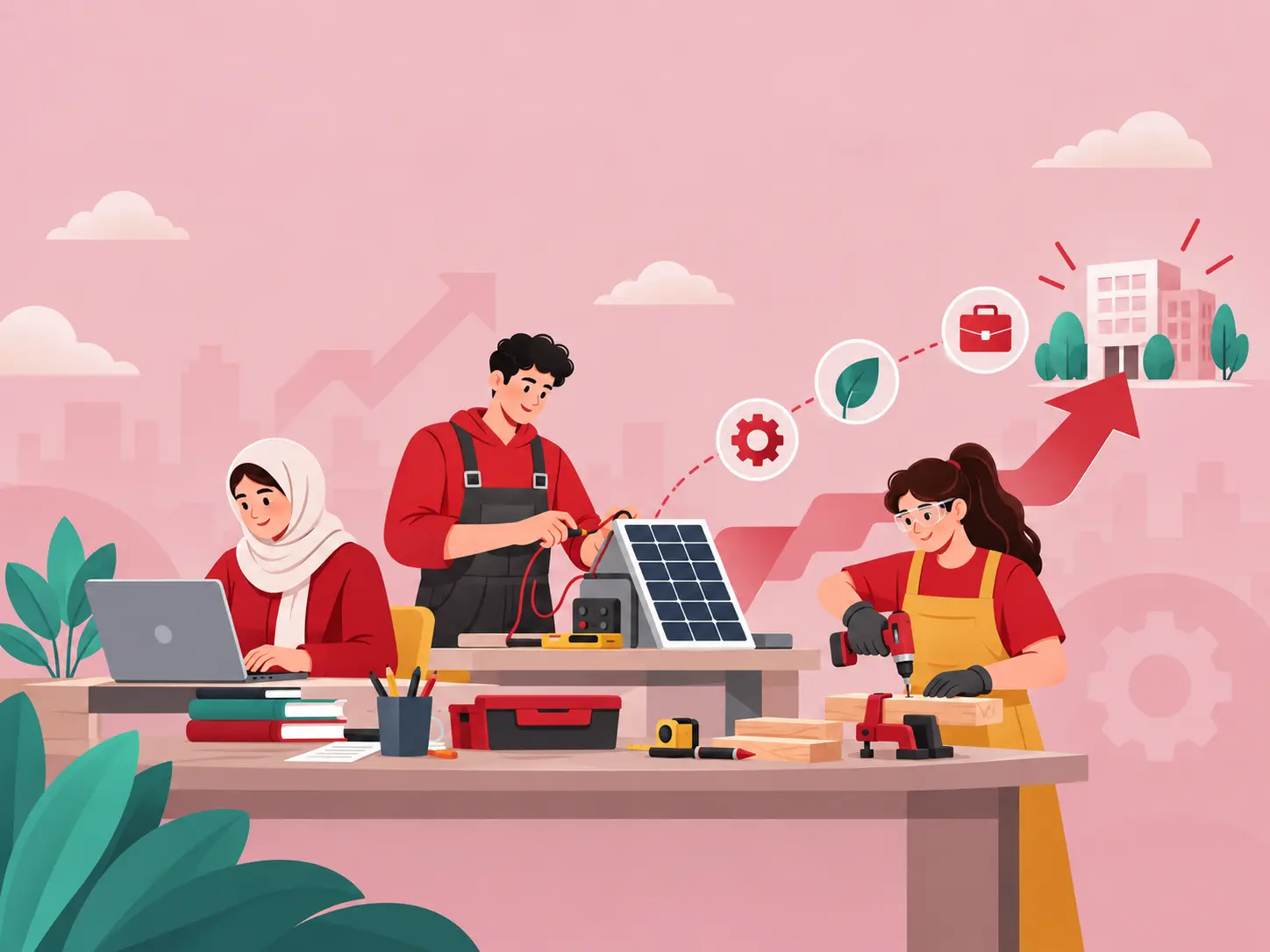
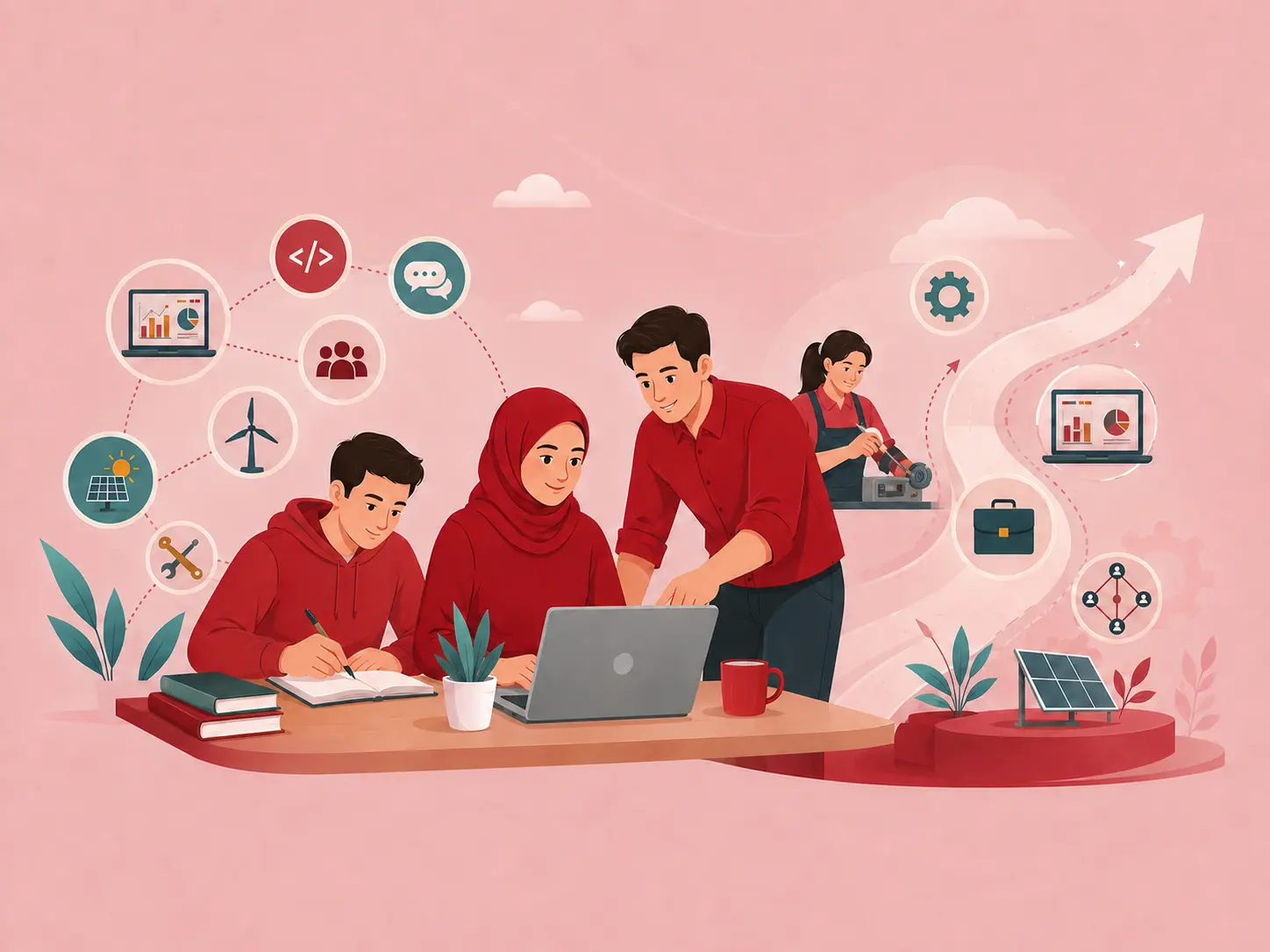
Our Career Development Program (CDP) was designed to answer this challenge directly by pairing skills training with real employment outcomes rather than treating them as separate goals. We follow a simple but effective Train, Connect, Enable model:
Train: We equip youth with technical skills across vocational, green, and digital tracks, combined with soft skills and English.
Connect: We link participants to real job opportunities through employer partnerships, internships, and job matching support.
Enable: We support youth in accessing freelancing and self-employment, including digital work platforms and entrepreneurship basics.
This model comes to life through dedicated pathways within our Career Development Program. Our Future Skills initiative builds digital readiness for youth entering a connected, technology-driven economy. Through Remote Talent Pathways: Jusoor Elkom, we connect trained, bilingual Syrian and Levantine youth directly with employers abroad seeking remote talent in administration, research, digital marketing, and graphic design, while guiding employers on managing remote teams well. We also welcome organizations to hire displaced talent through this pathway, and invite professionals to share their expertise as trainers and mentors.
For entrepreneurial youth, our Entrepreneurship Program complements this work through initiatives like Scale Beyond, which connects upskilling-focused investment opportunities to Jordan-based startups founded by talented Syrians.
From Skills to Employment: Real Stories of Transformation
Numbers tell part of the story, but the young people behind them tell the rest. Reem El Bikai, who joined Jusoor Elkom, our Remote Talent Pathways program, described what the experience meant for her: "The program equipped me with practical and soft skills that I apply daily, expanded my professional network, and gave me both flexibility and financial stability. It has broadened my worldview and helped me gain new perspectives beyond my community."
Building a Resilient Workforce for What Comes Next
The future of work will keep shifting, driven by artificial intelligence, the green transition, and evolving employer expectations. For Syrian and displaced youth, resilience in this new landscape depends on access, not just ambition. It depends on training that is tied to real market demand, mentorship that opens doors otherwise closed, and employer partnerships that translate potential into paid, dignified work. That is the model we continue to build and expand, one cohort, one hire, and one career at a time.
Frequently Asked Questions
What is the difference between upskilling and reskilling?
Upskilling means deepening existing skills to grow within a current role, such as a marketer learning advanced digital analytics. Reskilling means learning an entirely new skill set to move into a different field, such as a retail worker training for a career in software development. Both are central to the future of work.
Why is upskilling especially important for Syrian and displaced youth?
Displacement and years of disrupted education have limited many young Syrians' access to market-relevant training and employer networks, even though their talent and ambition remain strong. Targeted upskilling closes that gap, connecting capable young people to fast-growing sectors like digital services, green industries, and technical trades.
What programs does Jusoor offer for career development and upskilling?
Our Career Development Program (CDP) includes several pathways: Future Skills, which builds digital competencies; and Remote Talent Pathways, Jusoor Elkom, which connects trained talent directly to remote employers.
How does Jusoor connect trained youth to actual employment?
We follow a Train, Connect, Enable model. After training in vocational, digital, or green skills, participants are connected to employer partnerships, internships, and job matching support, and are enabled to pursue freelancing or self-employment where that path fits best.
How can I support upskilling opportunities for Syrian youth?
You can support our work by donating to fund training and employment pathways, volunteering as a trainer or mentor, or hiring skilled, trained talent through our Remote Talent Pathways program. Every contribution helps a young person move from potential to a paycheck.
Conclusion
Upskilling and reskilling are no longer optional extras in a fast-changing labor market. They are the foundation of a resilient career, and for Syrian and displaced youth, they can be the difference between talent left untapped and talent fully realized. Through our Career Development Program, we are building the training, mentorship, and employer connections that turn ambition into decent, dignified work. If you would like to help us bridge the opportunity gap for the next generation of Syrian talent, donate today or explore how to get involved at jusoor.ngo.