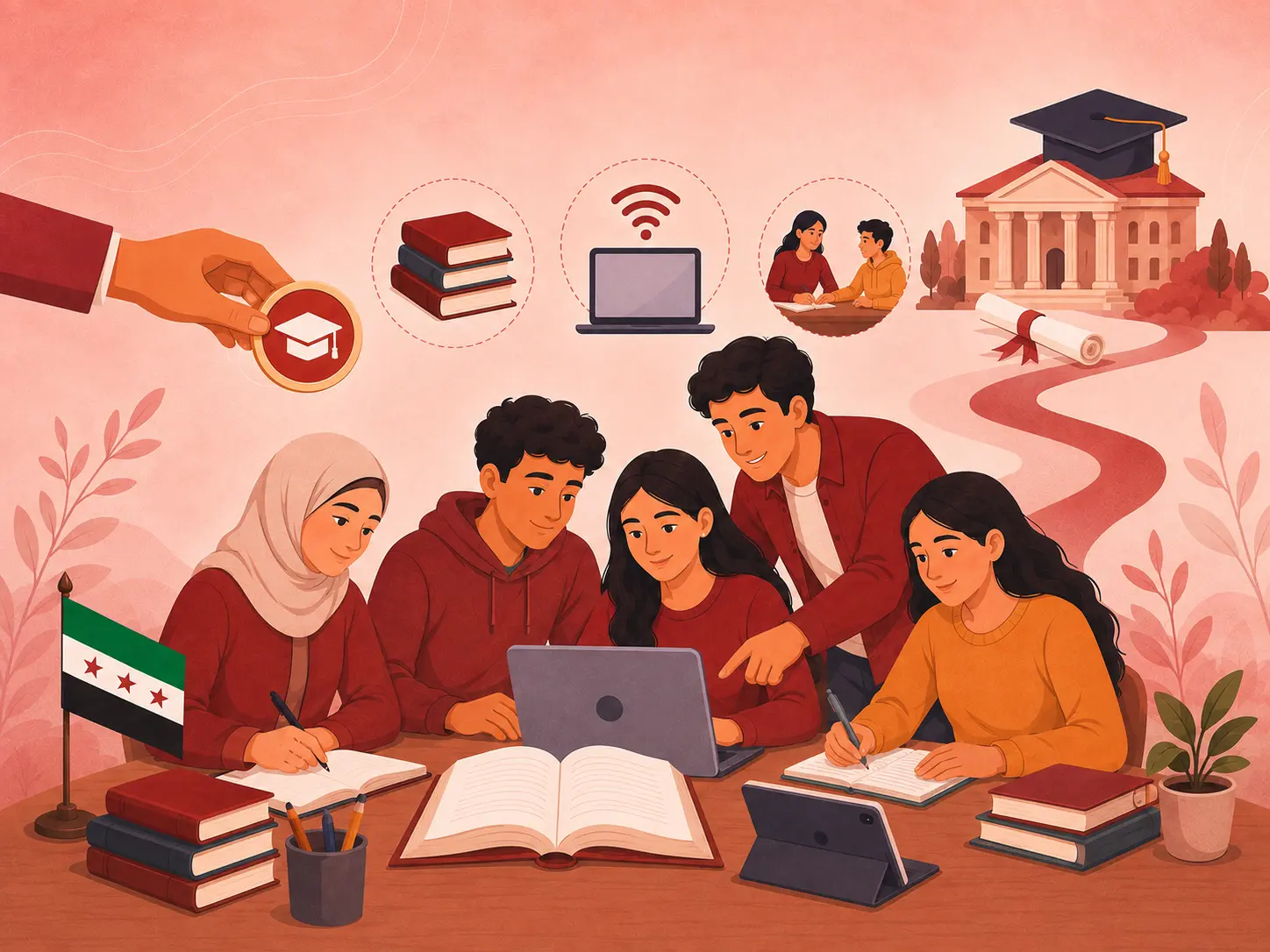
In 2026, education remains the most powerful tool for refugee children navigating displacement. However, the tool itself has transformed. We have moved beyond simple chatbots; today, Artificial Intelligence (AI) serves as a co-pilot for teachers and a personalized tutor for students.
For the youth in Lebanon’s emergency education programs, AI is no longer a luxury—it is a bridge to the global economy. At Jusoor, we are leveraging these advancements to ensure that displacement does not mean a digital dead-end.
Implementing AI Education in 2026: A Strategic Framework
Properly introducing AI into refugee contexts requires more than just an internet connection. In 2026, Jusoor focuses on a "Human-in-the-Loop" model to ensure technology serves the learner, not the other way around.
1. Edge AI and Offline Connectivity
In Lebanon, where infrastructure can be unstable, we now prioritize Edge AI—tools that run locally on devices without requiring constant high-speed internet. This ensures learning never stops during power outages.
2. AI Literacy as a Core Subject
It is no longer enough to use AI; students must understand it. Our curriculum now includes "Prompt Engineering" and "AI Ethics," teaching students (ages 10+) how to critically evaluate AI-generated content for bias.
3. Teacher-AI Synergy
We don’t replace teachers; we augment them. According to UNESCO’s 2025 Digital Learning Report, AI-assisted grading and lesson planning save educators up to 15 hours a week, allowing Jusoor’s teachers to focus on the emotional and social well-being of their students.

The Impact: How AI is Changing Lives in Lebanon
The integration of AI in Jusoor’s programs has led to measurable shifts in educational outcomes:
- Hyper-Personalized Learning Pathways: Every child learns at a different pace. Our AI platforms analyze real-time data to adjust difficulty levels, ensuring a student in a refugee camp receives the same tailored attention as a student in a private school.
- Linguistic Inclusion: New AI models specialized in Levantine Arabic dialects help bridge the gap between "home language" and "academic language," making complex subjects like science and math more accessible.
- Psychosocial Support Monitoring: In 2026, AI tools can help identify changes in a student’s engagement levels that may signal trauma or mental health struggles, allowing for earlier intervention by Jusoor’s counselors.
The 2026 Perspective: Pros and Cons of AI in Education
The Pros
- Closing the "Skill Gap": Refugee youth are learning 21st-century skills like Python and AI model training, making them competitive in the remote global workforce.
- Scalability: AI allows Jusoor to reach more children with high-quality content, even when physical classroom space is limited.
- Adaptive Assessment: Moving away from standardized testing, AI provides "Continuous Assessment," which tracks a child's growth over time rather than a single high-stakes moment.
- Inclusion for Students with Disabilities: AI-driven text-to-speech and visual aids have revolutionized learning for our students with diverse needs.
The Cons (and How We Mitigate Them)
- The AI Divide: Without NGOs like Jusoor, AI could widen the gap between the wealthy and the displaced. We advocate for Universal AI Access as a human right.
- Algorithm Bias: Many AI models are trained on Western data. We work to ensure our tools are culturally relevant and free from harmful stereotypes.
- Data Sovereignty: Protecting the privacy of vulnerable refugee children is paramount. Jusoor implements strict "Privacy by Design" protocols for all educational software.
- Over-reliance: We maintain "Screen-Free" zones and physical collaborative projects to ensure social development isn't lost to the algorithm.
Spotlight: Jusoor’s Future Skills Project & YetiConfetti
At the heart of our 2026 strategy is the Future Skills Project. We have evolved our partnership with the YetiConfetti app, which now uses advanced machine learning to provide a "Cognitive Map" of every learner.
This app doesn't just teach math and English; it identifies a child's cognitive strengths—whether they are a visual learner, a logical problem-solver, or a creative storyteller—and adapts the entire curriculum to match.
Looking Ahead: Breaking the Cycle of Poverty
By 2026, we have seen that AI education is a catalyst for economic independence. By equipping the youth of Lebanon with these "Future Skills," we are doing more than teaching; we are empowering a generation of "Refugee-Tech" leaders who will one day rebuild their home countries.
Want to support the digital revolution in refugee education? Join Jusoor in shaping a brighter future.