.webp)
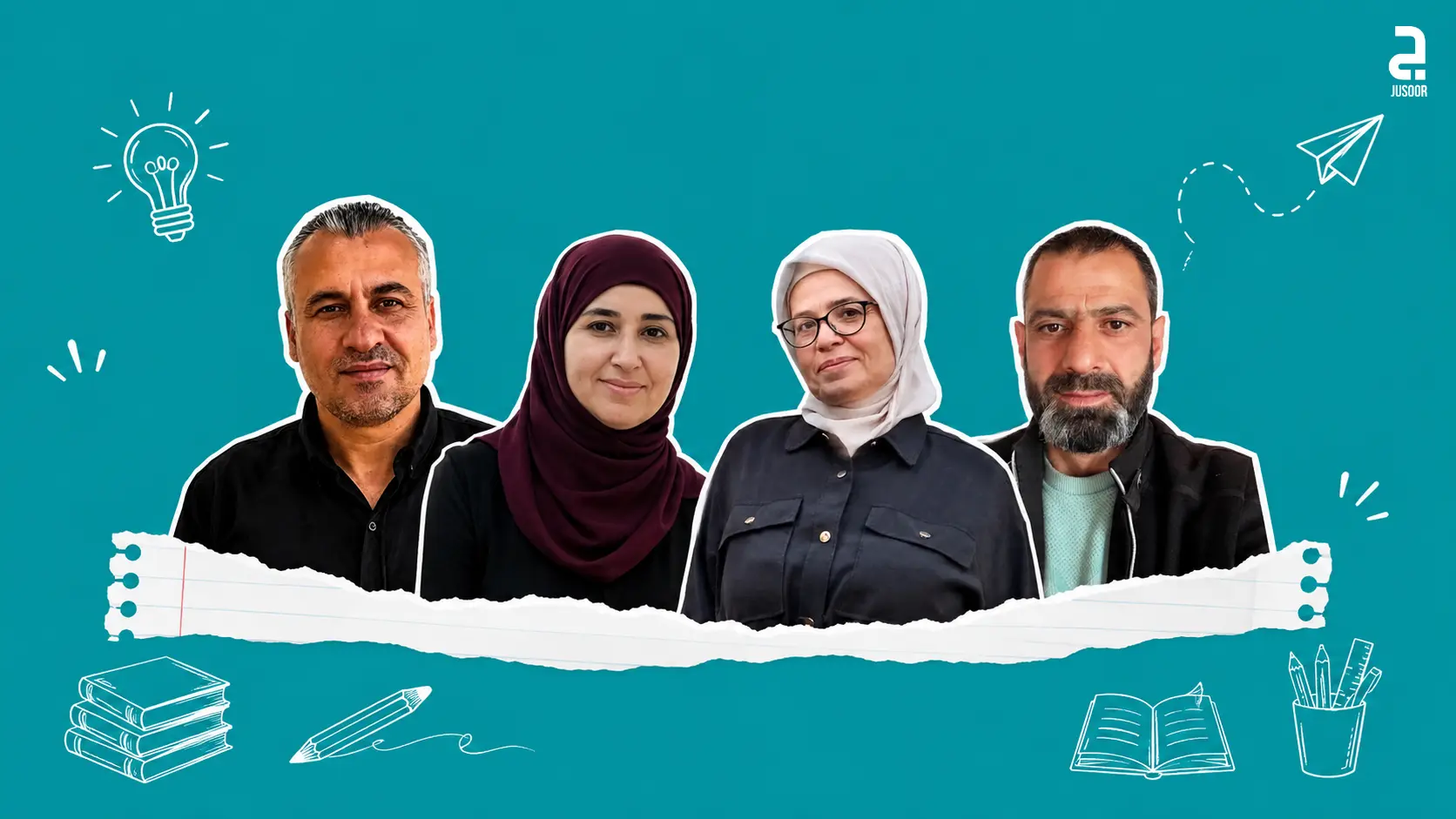
For years, the idea of going home existed somewhere between hope and impossibility for Syrian refugee youth growing up in Lebanon. They built lives there, navigating displacement, economic hardship, racism, and the quiet grief of growing up far from where they began. They studied, worked, volunteered, and kept going. And then, in late 2024, everything shifted. When Syria opened a new chapter, Jusoor's 2025 High School Scholarship graduates were ready.
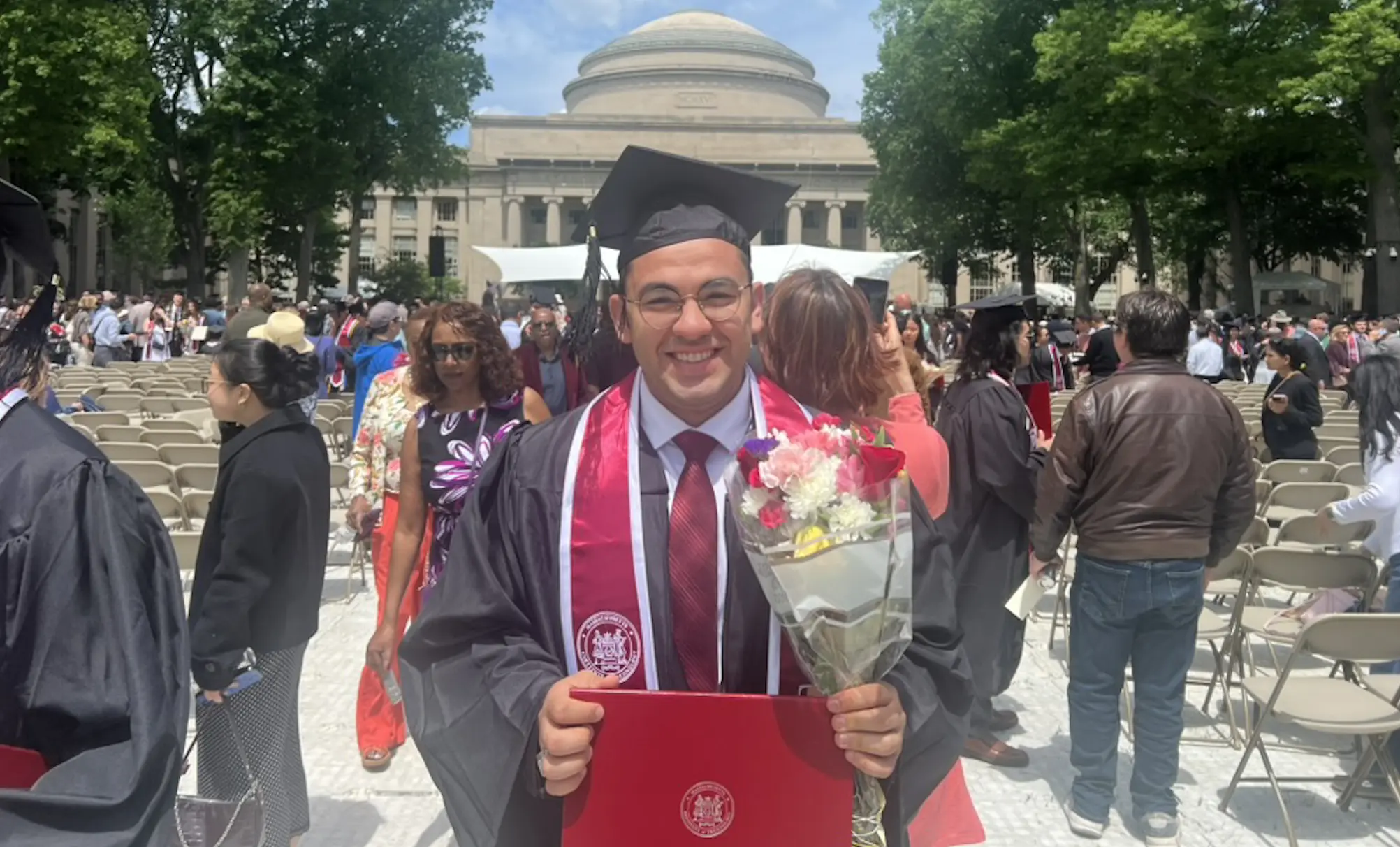
Meet Nazih Alhashoum, Qassim Aldaher, and Arwa Sanyour — three graduates of Jusoor's High School Scholarship Program who attended Tuyoor al Amal school in Tripoli, Lebanon. Today, Nazih is studying Business at the University of Hama, Qassim is studying Law at the University of Latakia, and Arwa is studying Physiotherapy at the University of Homs. Their paths to get there were shaped by years of hardship, resilience, and the steady support of a community that believed in them long before they arrived.
Nazih Alhashoum: From Night Shifts to the University of Hama
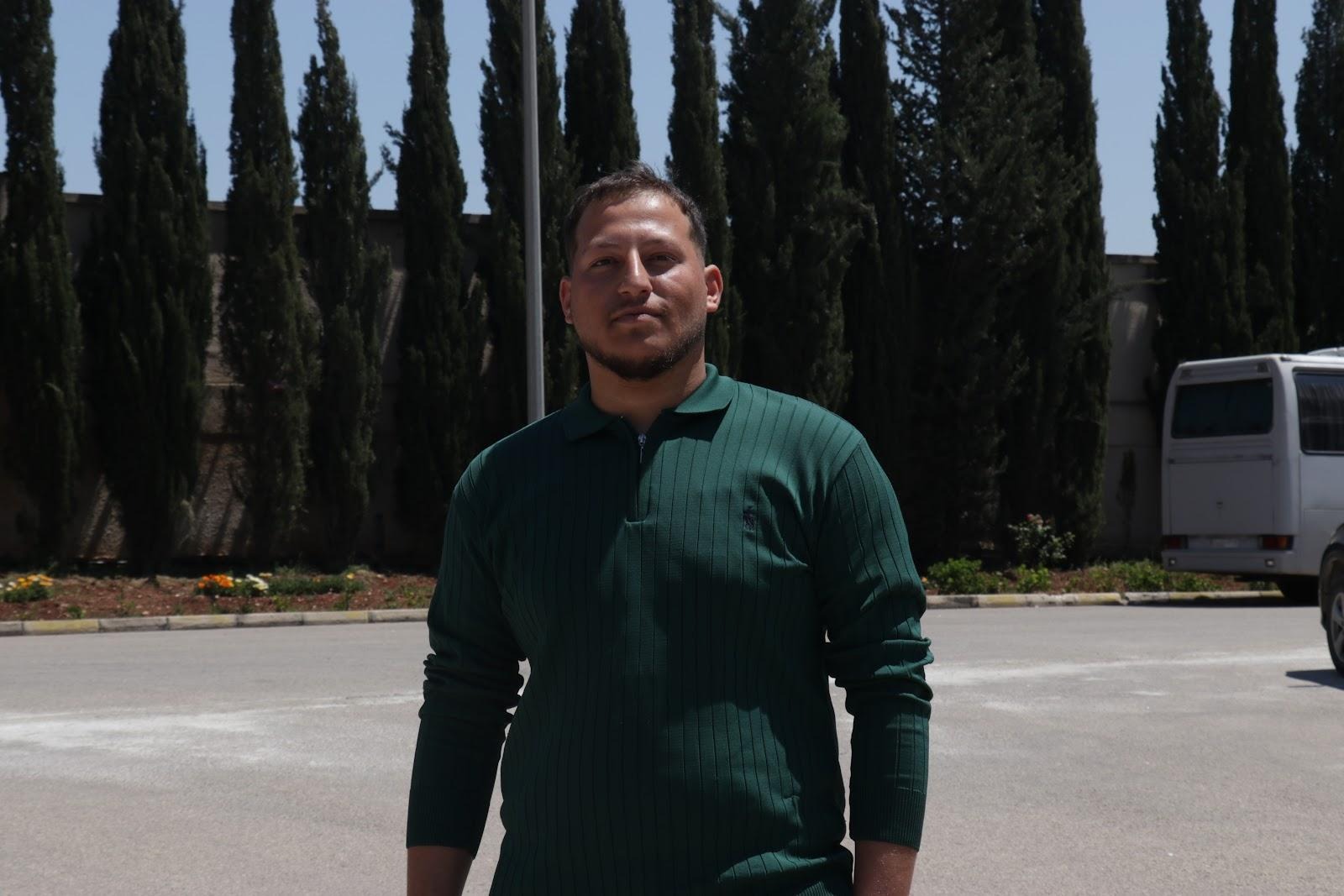
Nazih was born in Sahl el Gharb, Syria, in 2006. When the war forced his family out, they settled in Lebanon — first in Saida, then in El Shouf — where he would spend the next thirteen years. He was, for much of that time, largely on his own: no relatives nearby, no extended family to fall back on. What he had was determination.
To help his family make ends meet, Nazih worked running a delivery office and taking on other jobs in El Shouf while attending school the next morning without sleep. His first year of high school was the hardest. His grades suffered, not for lack of ability, but because he was simply running on empty. "I was working night shifts and going to school without any sleep," he recalls. "I had very bad grades. I was studying during my working hours at night."
But Nazih kept going. Gradually, his grades improved, and his teachers began to see what was behind them. One teacher, Mahmoud, became a consistent source of support and encouragement. Jusoor's scholarship program provided not just financial relief but also the psychological support and soft skills training that helped him hold it all together. By the time he graduated, he had known for years what he wanted to study: business.
When news came that Syria had turned a new page, Nazih felt the pull immediately. After fourteen years without family around him, the prospect of going home — even to a country that needed rebuilding — was not a question. He found only a wall where his family's house had once stood. "You have to create something for yourself," he says. "You are in a war-torn country; you won't find things waiting for you. But it's beautiful to go home." His father, a carpenter, has since opened a small company, and for the first time in years, Nazih can focus on his studies rather than survival. He is planning to work again in the summer — but right now, his eyes are on his grades, and on the future he is building at the University of Hama.
Qassim Aldaher: Finding Purpose in Law at the University of Latakia
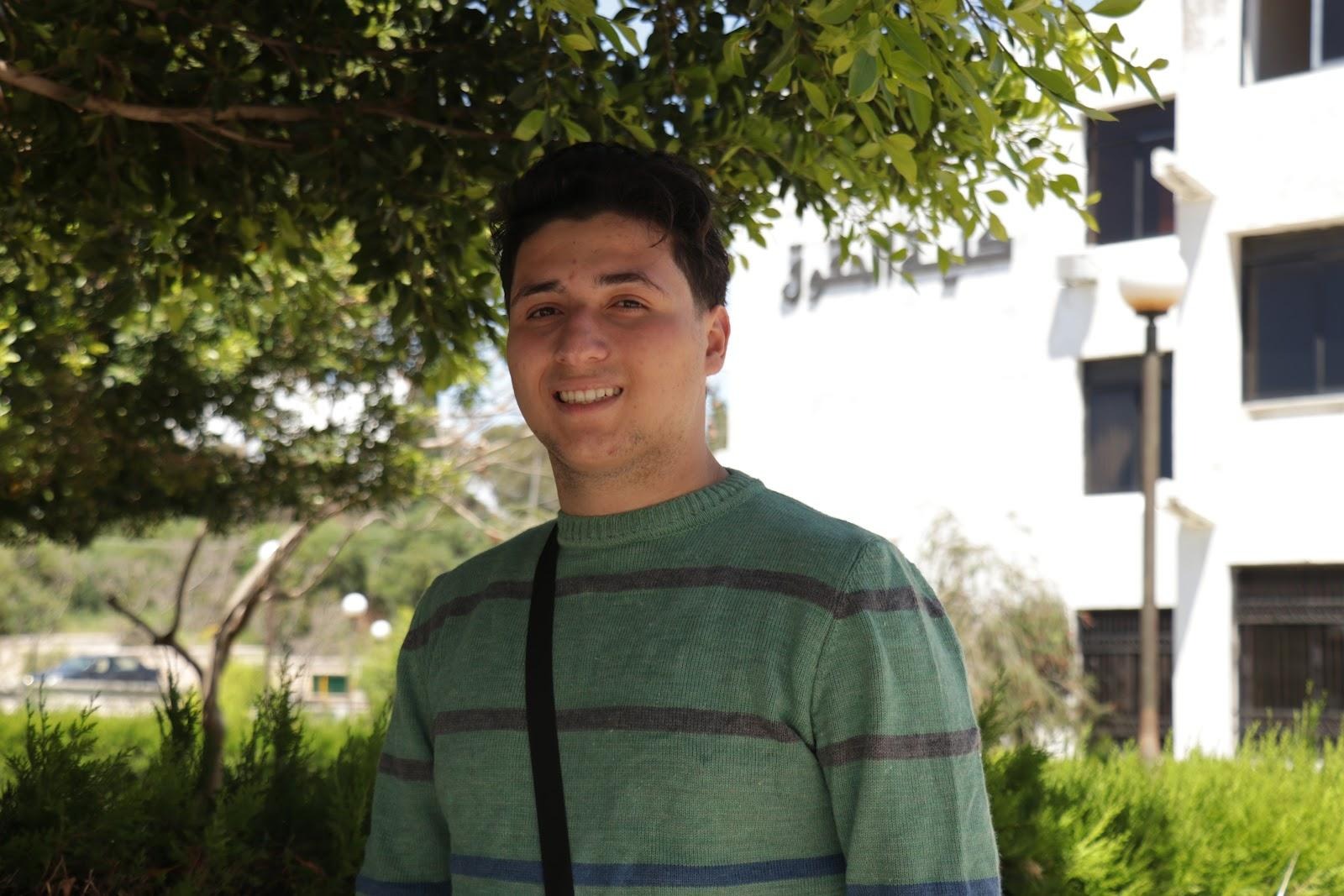
Qassim was born in Homs in 2007. He left Syria after fourth grade, moving to Tripoli to live with his grandparents while his father — an anesthesiologist — navigated the upheaval of displacement. Like many Syrian students in Lebanon, he faced barriers that had nothing to do with his ability: finding schools that would register Syrian students, adapting to a new environment, and carrying the weight of being far from home during the formative years of his adolescence.
At Tuyoor al Amal, through Jusoor's scholarship program, Qassim found his footing. He worked in agriculture and delivery alongside his studies and volunteered with iftar meal distributions — showing up for his community even while managing the pressures of his own circumstances. He speaks with particular warmth about the psychological support built into Jusoor's program, which helped him stay grounded through the harder years of high school. "It genuinely helped," he says simply.
His sense of purpose came into focus early. He knew since his brevet exams that he wanted to study law — to work as a lawyer or with the police, to be someone people could turn to. Returning to Syria was bittersweet. "I am happy to be back but also upset to leave," he reflects. "I got used to life in Lebanon and felt like I belonged." But in Latakia, something unexpected happened: the sense of belonging that had eluded him in Lebanon arrived almost immediately. He made friends with ease, found his academic footing quickly, and — drawing on a longstanding strength in mathematics — is already tutoring fellow students. "Even though schools are better in Lebanon," he says, "I have more energy here." His hopes for Syria's future are quietly ambitious: safety, peace, and prosperity. "There are a lot of challenges," he acknowledges. "But we will be active members of society."
Arwa Sanyour: Building Access to Care at the University of Homs
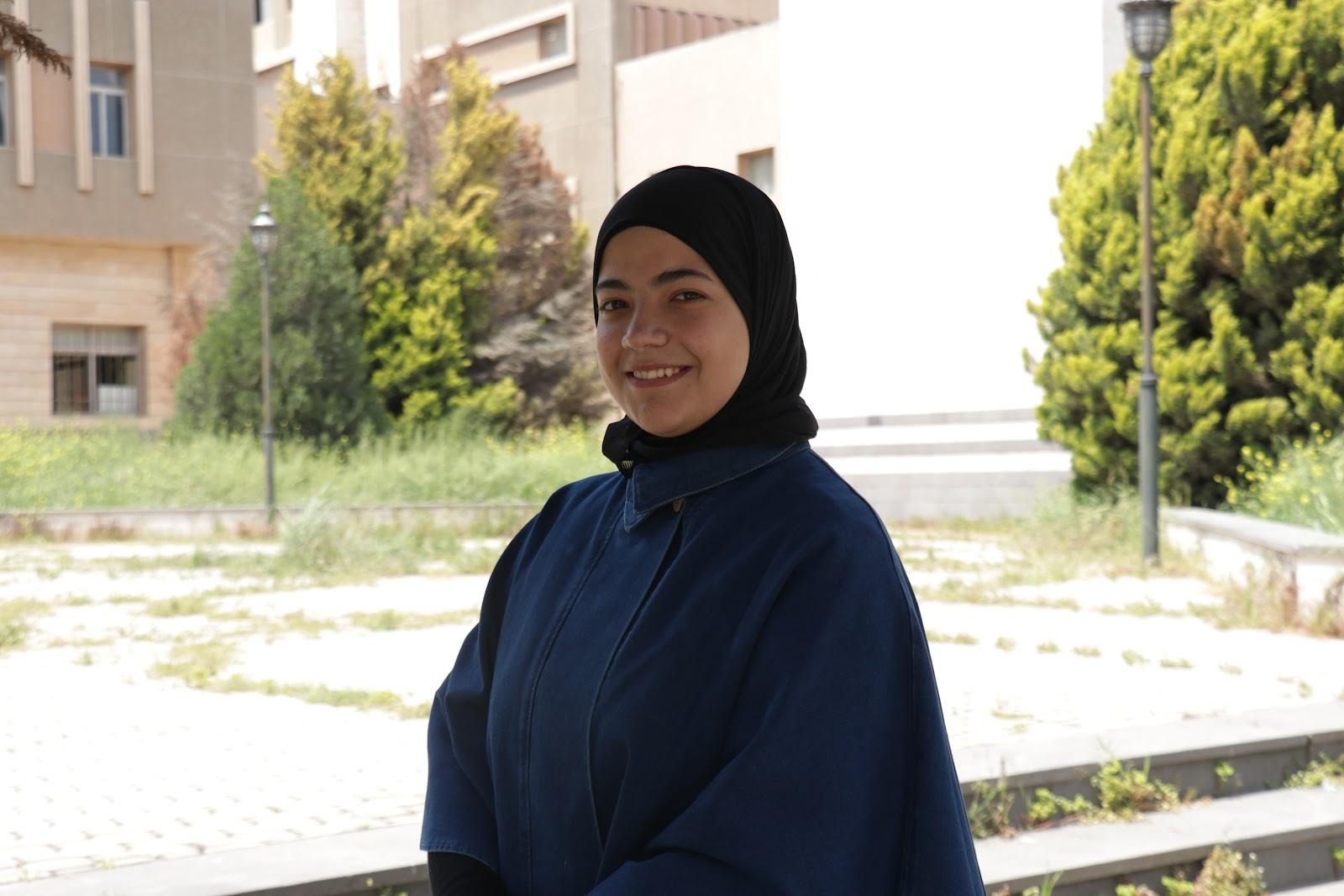
Arwa fled Damascus in 2014. Her family's first year in Lebanon was marked by constant movement — relocating repeatedly before finally settling in Tripoli. Finding a school willing to register Syrian students was an obstacle in itself, and the family moved between several before hearing about Tuyoor Al-Amal. When Arwa reached tenth grade, the nearest high school was too far, and transportation was not manageable. Her brother and sister had already had to leave school because of it.
Jusoor's scholarship program changed the trajectory of the entire family. A school bus. Covered tuition. All the siblings enrolled together. The relief was not just logistical — it was the difference between a future and the absence of one. "The teachers were great," Arwa says. "Our grades were very good compared to other schools." Her father had been a math teacher in Syria; he understood what education could unlock. In Lebanon, he worked as an accountant, holding the family together. He told his children that if they were going back to Syria, they would all have to support each other.
Arwa chose physiotherapy for reasons that are both deeply personal and outward-looking. Her father lives with a hunchback that requires constant care. She herself has a leg alignment condition. She has felt firsthand what it means to need this kind of treatment — and what it means when it is not within reach. "Physiotherapy is very expensive," she says. "I want to make it available." Her particular focus is on those injured during the years of conflict — people whose needs are urgent and whose access to rehabilitation is often the last thing anyone thinks about.
Going back was not easy, even after years of hardship in Lebanon. "It was difficult to come back," Arwa says honestly. "Even though Lebanon was hard, I had gotten used to it." Syria is still very much in the process of rebuilding, and she sees that clearly. But she also sees something else: a shift in the people around her, a quiet pride in being Syrian that feels new and earned. "People are proud of who they are," she says. "Proud to be Syrian." That pride and that purpose are what she is carrying into her studies at the University of Homs.
A Generation Ready to Rebuild
Nazih, Qassim, and Arwa are not simply students who made it through. They are young people who worked, sacrificed, adapted, and refused — through years of displacement and uncertainty — to let go of what they wanted their lives to become. The Jusoor High School Scholarship Program walked that road with them: covering tuition and transportation, providing books and psychological support, offering workshops on soft skills, and helping them navigate university applications. Tuyoor Al-Amal in Tripoli was the place where it all came together.
Now they are home, studying at universities in Syria, contributing to the communities their country needs to rebuild — in business, in law, in healthcare. They are proof of what becomes possible when the opportunity gap is taken seriously.
At Jusoor, we believe that education is not just a gift to an individual — it is an investment in a country's future. Syria has no shortage of young people with talent, ambition, and a deep desire to contribute. What they need is the bridge to get there. We are committed to keep building it — because every student who comes home educated and ready is a foundation stone in what comes next.
%20(1).webp)