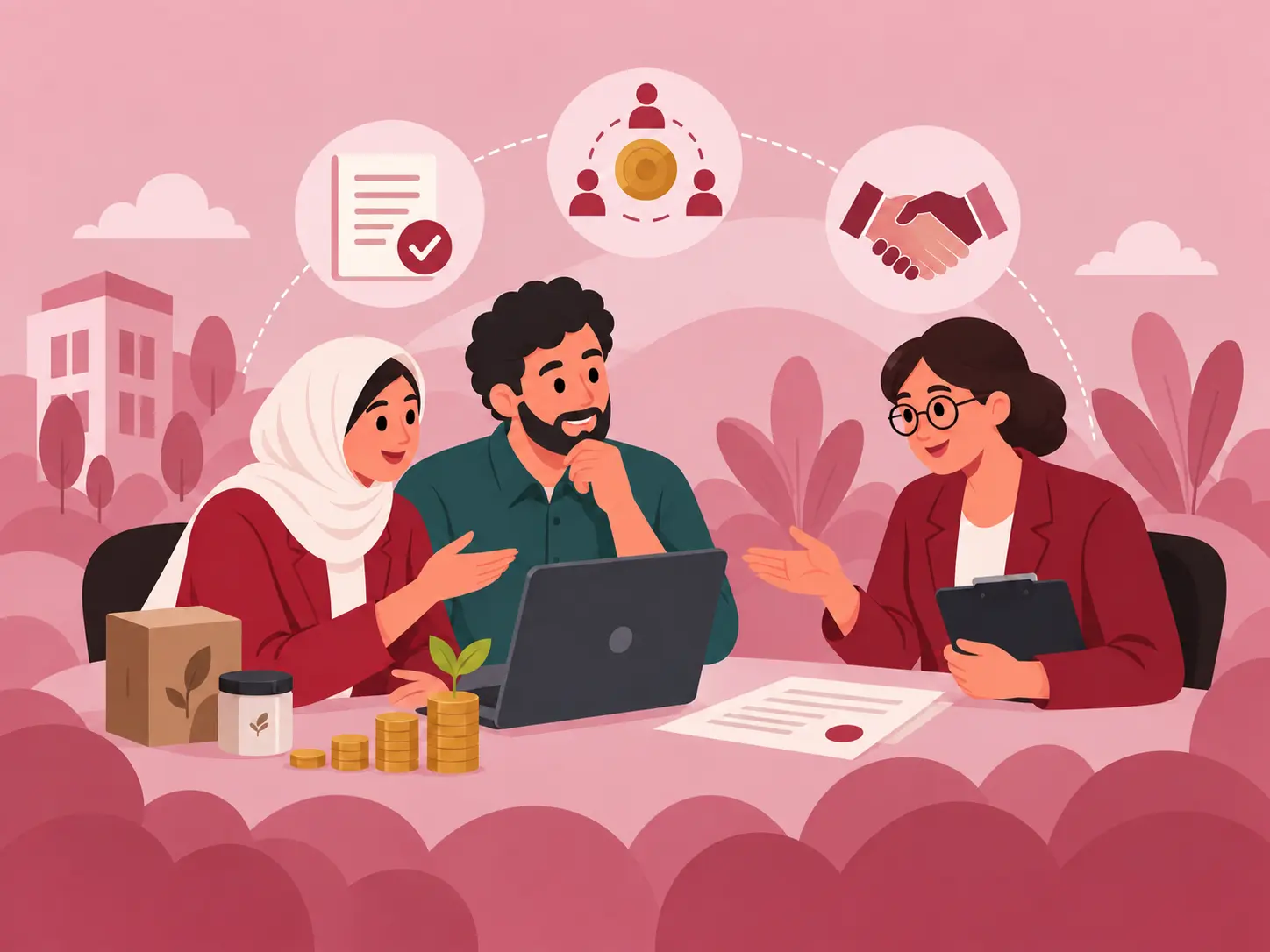
Displacement rearranges a life, but it does not erase ambition. For many young Syrians who have lost access to their universities, workplaces, and professional networks, entrepreneurship becomes a way to rebuild on their own terms. More than 37 million people are currently registered as refugees worldwide, and within that number are engineers, teachers, and shopkeepers who understand a market's unmet needs better than anyone, because they have lived them firsthand.
Building a startup while displaced comes with a distinct set of obstacles: uncertain legal status, limited access to capital, and networks that had to be rebuilt from nothing. Yet founders across the region are doing exactly that, moving from a rough idea scribbled on paper to a functioning, revenue-generating business. We have supported that journey through our Entrepreneurship Program since 2014, and we have watched the pattern repeat: the idea comes first, but it is validation, mentorship, and community that carry it to launch.
Key Insights:
- Displacement often sharpens a founder's ability to spot an unmet need before anyone else does.
- Testing an idea with real customers early prevents wasted time and money later.
- Legal status and access to capital remain the toughest early barriers for displaced founders.
- Mentorship and peer community fill gaps that formal systems often leave open.
- Structured incubators can take a founder from a rough idea to an accredited, investable business.
- Real founders, including Safa Elcasim and Azad Hasan, show what is achievable with the right support.
Spotting the Idea: Where Displacement Meets Innovation
Every startup begins with someone noticing a gap that others have overlooked. For displaced founders, that gap is often deeply personal. Consider the founders behind Mujaz, who noticed a lack of high-quality Arabic cultural content online and built a platform that now creates jobs for local creatives while celebrating Arab identity, a story we featured in our piece on the entrepreneur's journey.
Safa Elcasim, a Syrian entrepreneur based in Türkiye, followed a similar path. She first launched Education Unlimited to help fellow displaced students and expats access universities. While running that platform, she noticed a second, larger problem: many of those same students could not find part-time work to support themselves. That observation became Joblink, a platform connecting students with employers.
The lesson from both stories is consistent. The best startup ideas rarely arrive as sudden inspiration. They surface through lived experience, a founder noticing a friction point that they themselves have struggled with, and deciding to solve it for others too.
Validating the Idea and Building a Business Plan
An idea is only a hypothesis until it meets real customers. Founders in our incubators are taught to test assumptions before committing scarce time and money. One eco-friendly packaging startup piloted its product with local cafés first, refining the offering based on direct customer feedback rather than guesswork.
Once an idea shows early promise, founders need a clear plan to communicate it to mentors, partners, and eventually investors. We teach a Business Model Canvas, a one-page framework that maps out a venture's value proposition, target customers, channels, costs, and revenue streams. One startup, Uniex, used exactly this tool during our Disruptors project to sharpen its model and pitch to investors with confidence.
This stage often feels slower than founders expect, but it is where a promising idea becomes a viable business. Skipping validation is one of the most common reasons early ventures fail, displaced or not.
Facing the Barriers Unique to Displacement
Displaced founders carry an additional layer of difficulty that many entrepreneurship guides do not address: legal and administrative exclusion. A 2021 Wilson Center analysis found that only one in five Syrians displaced to Lebanon is legally eligible to register a business, largely due to passport and residency requirements that many cannot meet. Similar restrictions apply across the region, where a missing document can stall a promising venture before it ever opens its doors.
Access to capital compounds the problem. Without credit history, collateral, or a local co-signer, displaced founders are frequently locked out of traditional bank loans, regardless of how strong their business idea is. This is precisely why our Entrepreneurship Program was designed to help founders overcome legal obstacles, access funding, and connect with investors who might otherwise never see their pitch. It is not a substitute for policy reform, but it closes real gaps in the meantime.
Finding Mentorship, Community, and Capital
Founders rarely succeed alone, and displaced founders in particular benefit from a rebuilt professional network. Through our Startup Roadshow, one cohort of entrepreneurs received more than 50 hours of group business training, over 600 hours of one-on-one mentorship, and direct business services worth more than $100,000, at no cost to the founders.
This kind of support changes outcomes. In the United States, refugees are entrepreneurs at notably higher rates than other groups. According to research compiled by the International Catholic Migration Commission, 13% of refugees there are entrepreneurs, compared with 11.5% of other immigrants and 9% of the native-born population. The drive is clearly present. What is often missing is structured access to mentors, capital, and a first professional network, exactly what a well-designed incubator provides.
Our program has also earned accreditation from EFMD Global under its Online Course Certification System, making us the first NGO-run incubation program to receive this recognition. For founders, that accreditation opens doors to partnerships and investors who might otherwise overlook a self-taught entrepreneur's credentials.
From Launch to Scale: What Success Looks Like
Launching is a milestone, not a finish line. Azad Hasan, an Iraqi doctor turned entrepreneur, founded Eduba in a market that had little edtech infrastructure at the time. After joining our Startup Roadshow accelerator, Eduba grew by 700% during the COVID-19 pandemic, earned accreditation from Iraq's Ministry of Education that opened access to more than 25,000 educational institutions, and ultimately achieved a successful exit through acquisition.
Eduba is not an isolated case. Since 2014, our Entrepreneurship Program has trained more than 2,000 entrepreneurs and helped launch or grow over 600 businesses and startups, mobilizing more than $27 million in support along the way. Scaling requires the same ingredients as launching: mentorship that continues past graduation, a community of peers who understand the specific challenges of building while displaced, and access to capital that does not disappear once the first product ships.
Frequently Asked Questions
What is the first step to building a startup as a displaced entrepreneur?
The first step is identifying a real, specific problem, ideally one the founder has experienced directly, and testing that idea with a small group of real potential customers before investing significant time or money.
What are the biggest barriers displaced entrepreneurs face when starting a business?
The most common barriers are legal and administrative: missing documentation, residency restrictions, and a lack of credit history or collateral, all of which can block access to formal business registration and traditional financing.
How does Jusoor support displaced entrepreneurs?
Our Entrepreneurship Program offers accredited incubators, hands-on mentorship, and flagship projects like the Startup Roadshow and Disruptors, all designed to help founders overcome legal obstacles, refine their business models, and connect with investors.
Can displaced entrepreneurs access funding without giving up equity?
Yes. Our Small Business Accelerator connects founders to mentorship, training, and pathways to finance without requiring equity in return, so founders retain full ownership of what they build.
What happens after a startup graduates from an incubator program?
Graduates continue to receive mentorship and access to our alumni network as they scale. Some, like Eduba, go on to achieve major growth milestones or a successful acquisition, while others use the connections made during the program to secure their next round of investment.
Who can join Jusoor's Entrepreneurship Program?
The program is open to Syrian entrepreneurs as well as members of host communities across the region, reflecting our belief that displacement should never be a barrier to building something meaningful.
Conclusion
From a first observation about an unmet need, to validating that idea with real customers, to navigating legal and financial barriers, to finding the mentors and community that carry a founder through to launch and beyond, building a startup while displaced is not a single leap. It is a sequence of deliberate, learnable steps, and founders like Safa Elcasim and Azad Hasan prove every day that the sequence works.
If you are a displaced entrepreneur ready to take that first step, explore our Entrepreneurship Program to learn how to apply. If you would like to mentor a founder or support the next Eduba, get involved or donate today. Every idea deserves the chance to become a launch.