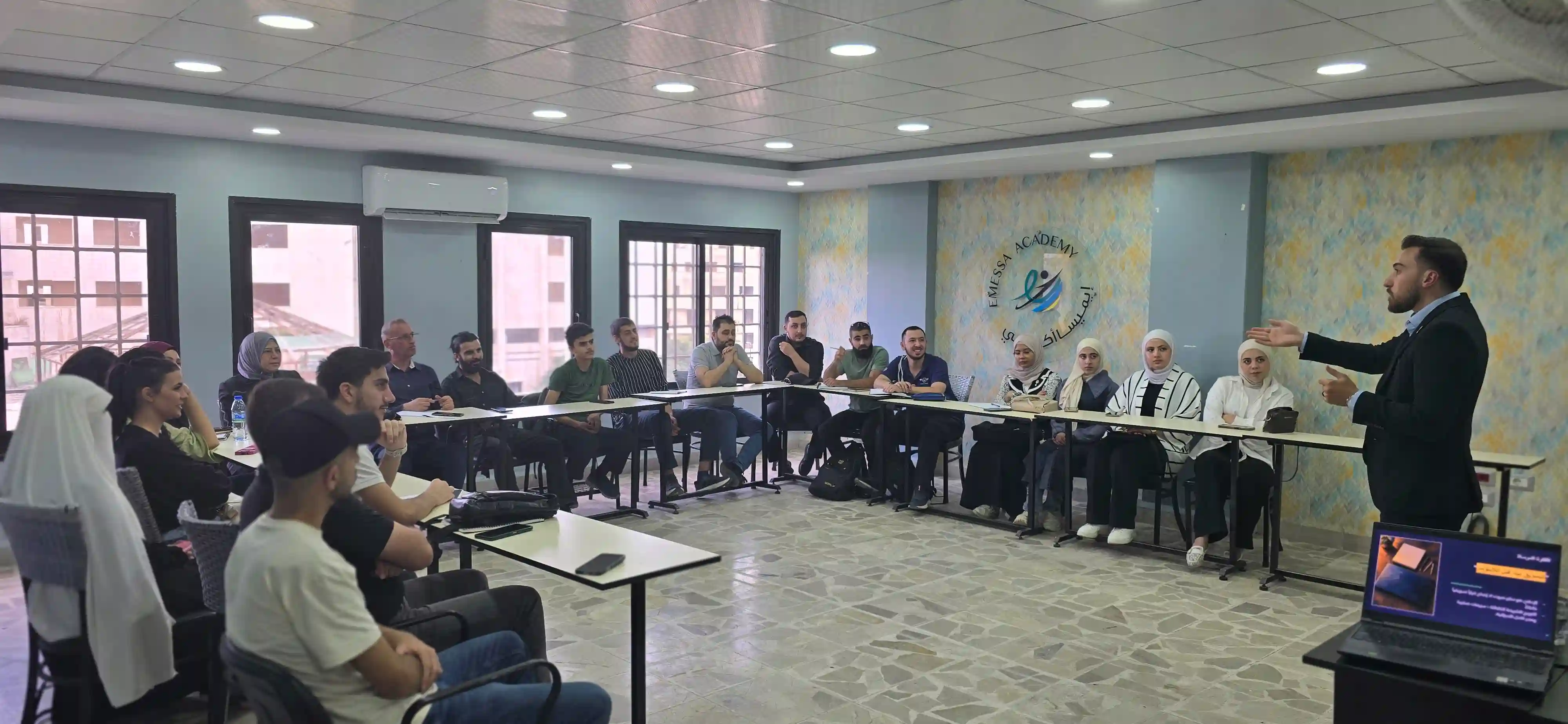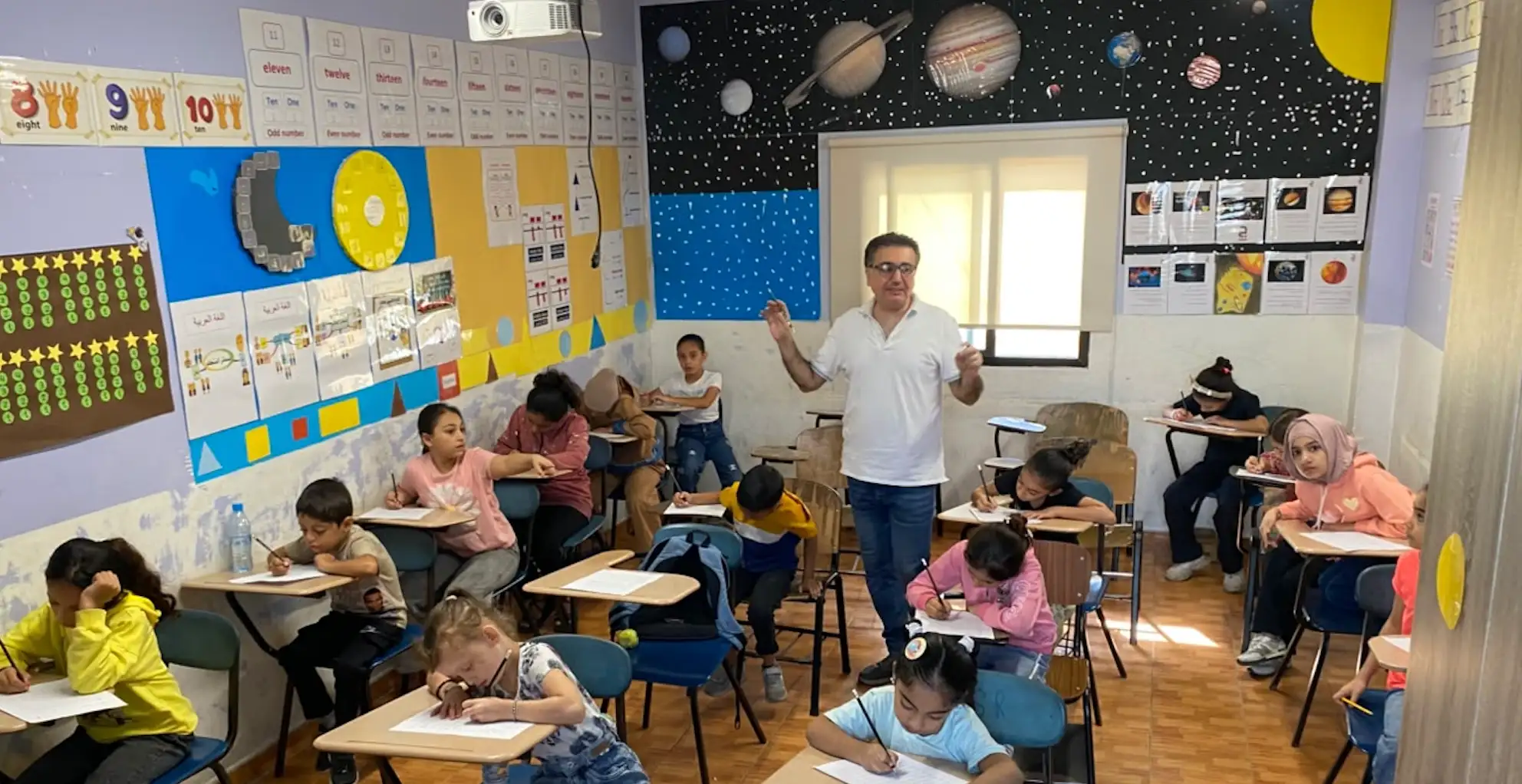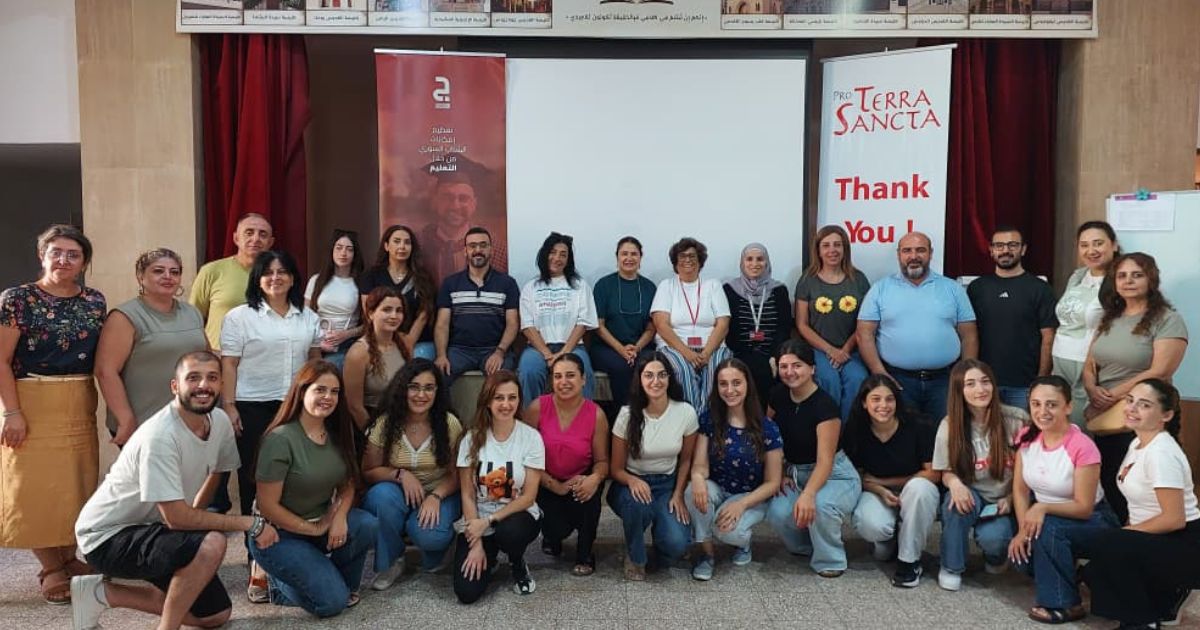
Across Harasta, Hama, Latakia, and Aleppo, 269 teachers took part in a transformational journey as educators, led by Jusoor. Five trainings, each a week-long, offered new insights into classroom management, student-centered learning, critical thinking, assessment, and teaching in times of crisis during 2026.
Our Head of Refugee Education, Suha Tutunji, and our Academic Coordinator, Tanya Nammour, ran the training. They were joined by our former Jurahiya center principal, Sara Shama, and our former teacher, Jihad Qaisania, who started as teachers in our centers several years ago and have now become trainers themselves, transferring the skills and knowledge they acquired in our centers in Lebanon to Syria.
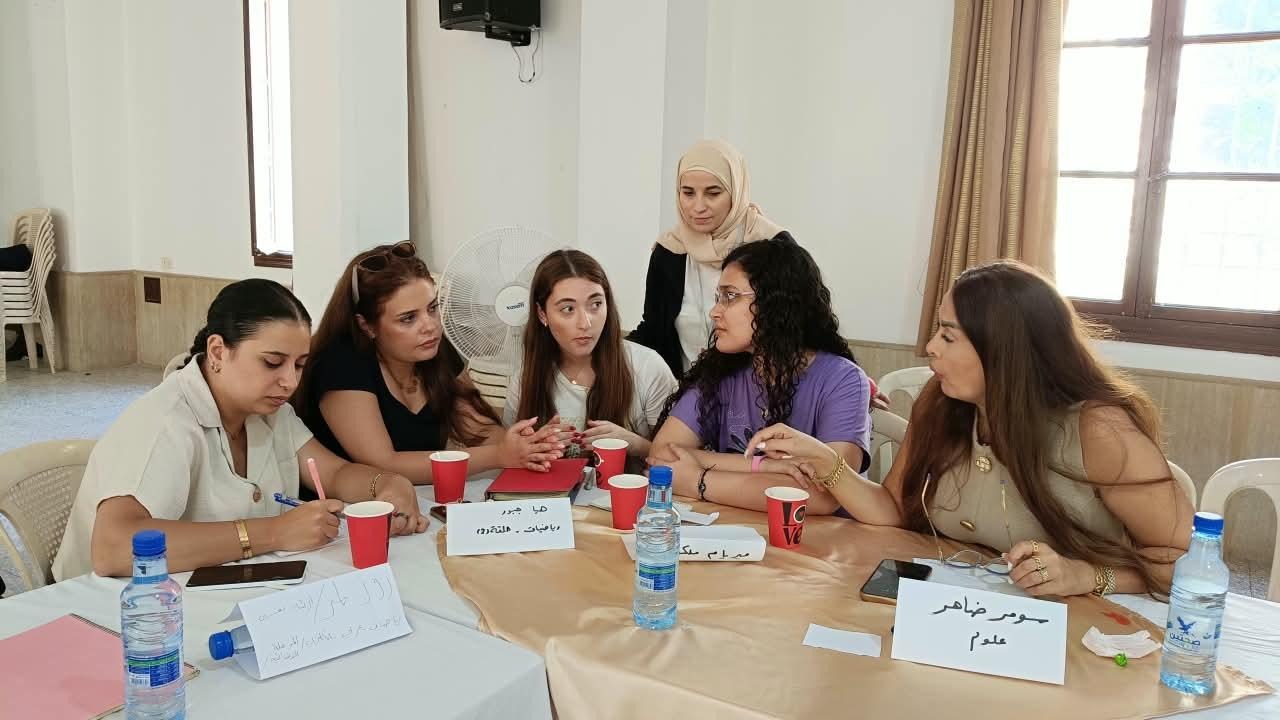
The trainees were split into two groups: early childhood educators and predominantly elementary school teachers, with the material adapted to fit the needs of each group.
The 21st-century skills training focused on critical thinking, social-emotional, and collaborative learning. Teachers were taught through hands-on activities and debriefing sessions rather than traditional instruction so they themselves can experience these teaching methods and then adapt them according to the needs of their classrooms.
“One thing that was stressed in the workshop was collaborative work. To really integrate my students in collaborative work, instead of relying only on instruction,” Amina Mishish, a teacher from Latakia, shared.
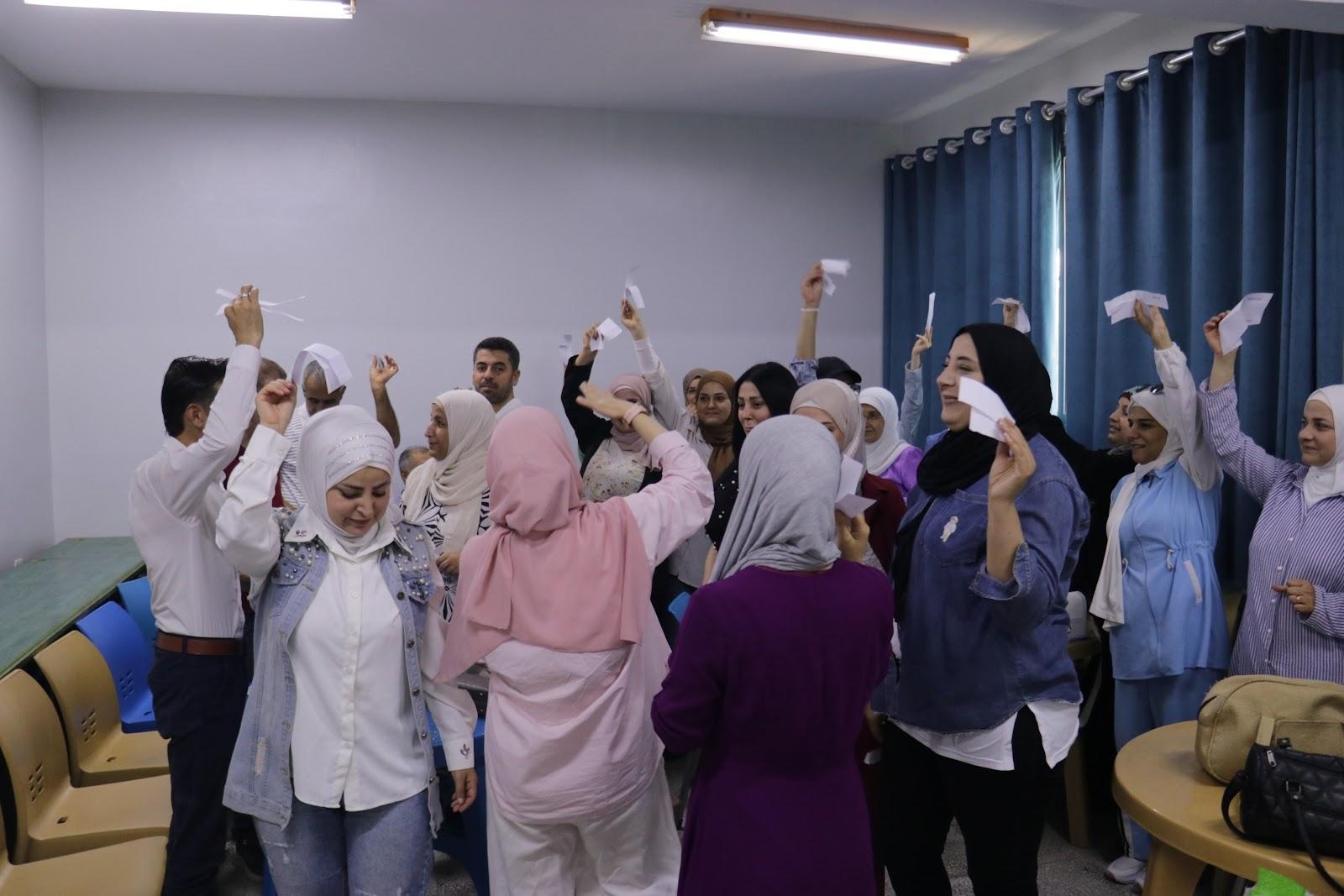
Feedback collected after the training was overwhelmingly positive: 89% of teachers praised the content quality, 82% noted its direct relevance to their daily work, and 74% reported heightened confidence in applying these new strategies in their classrooms. During the August follow-up rounds in Latakia and Aleppo, satisfaction rates climbed even higher, with 97% commending content quality and 90% noting its daily relevance.
At Jusoor, our work over the past 15 years with children and educators has shown us that effective, responsive, and collaborative teaching, along with safe and inspiring learning environments, can greatly improve a student’s learning journey, despite the disruption or challenges that come their way. This is why we are choosing to continue to invest in bringing our expertise and lessons learned into Syrian classrooms.
By investing in our teachers, we hope to invest in the future of Syria, one classroom at a time. We thank CIPA, Asfari Foundation, Porticus Foundation, and Chalhoub Group for their generous support, which made these workshops possible.