.webp)
Syria's schools have lived through more than a decade of disruption. Buildings were damaged or destroyed, teachers were displaced, and entire school years were lost. For the children now sitting in classrooms across the country, many are returning from years abroad — in Lebanon, in Turkey, in Jordan — carrying interrupted educations, uneven foundations, and in many cases, the weight of experiences no child should have to carry. For the teachers receiving them, the challenge is immense: how do you meet a classroom full of children who are all starting from different places, many of whom have never learned to sit still in a lesson, when the textbooks assume they all began at the same point?
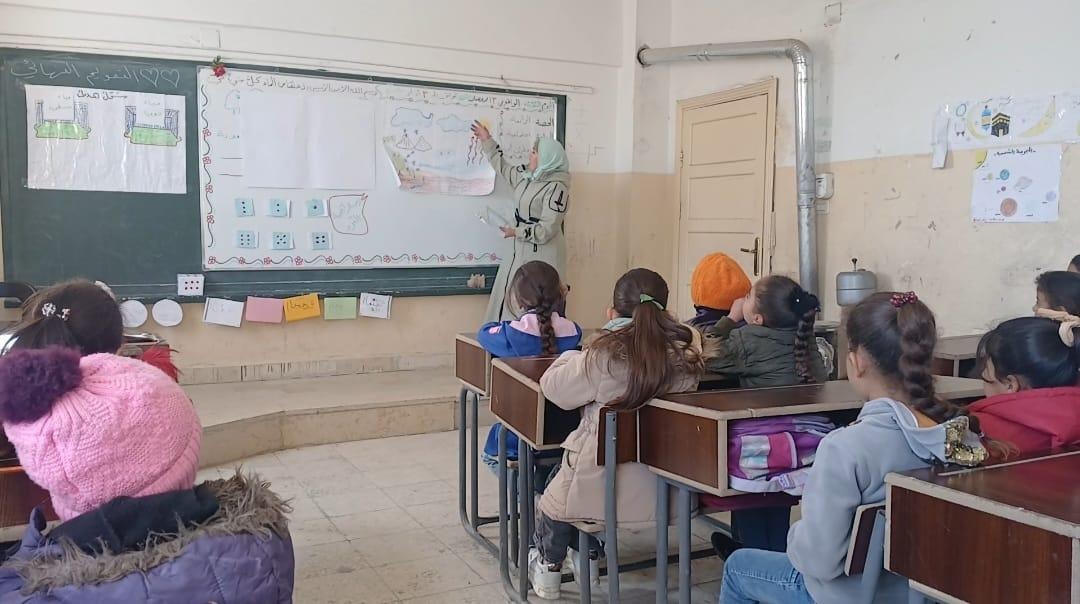
Aziza Darwish has been living with that question for seven years. She teaches grade two at Harran al-Awameed School for Girls, all subjects, in a town that felt the war up close. She started a university degree in Arabic literature before the conflict made it too unsafe to continue. She never finished it. She stayed, she adapted, and she kept teaching. "It's challenging," she says. "But teaching is my passion.”
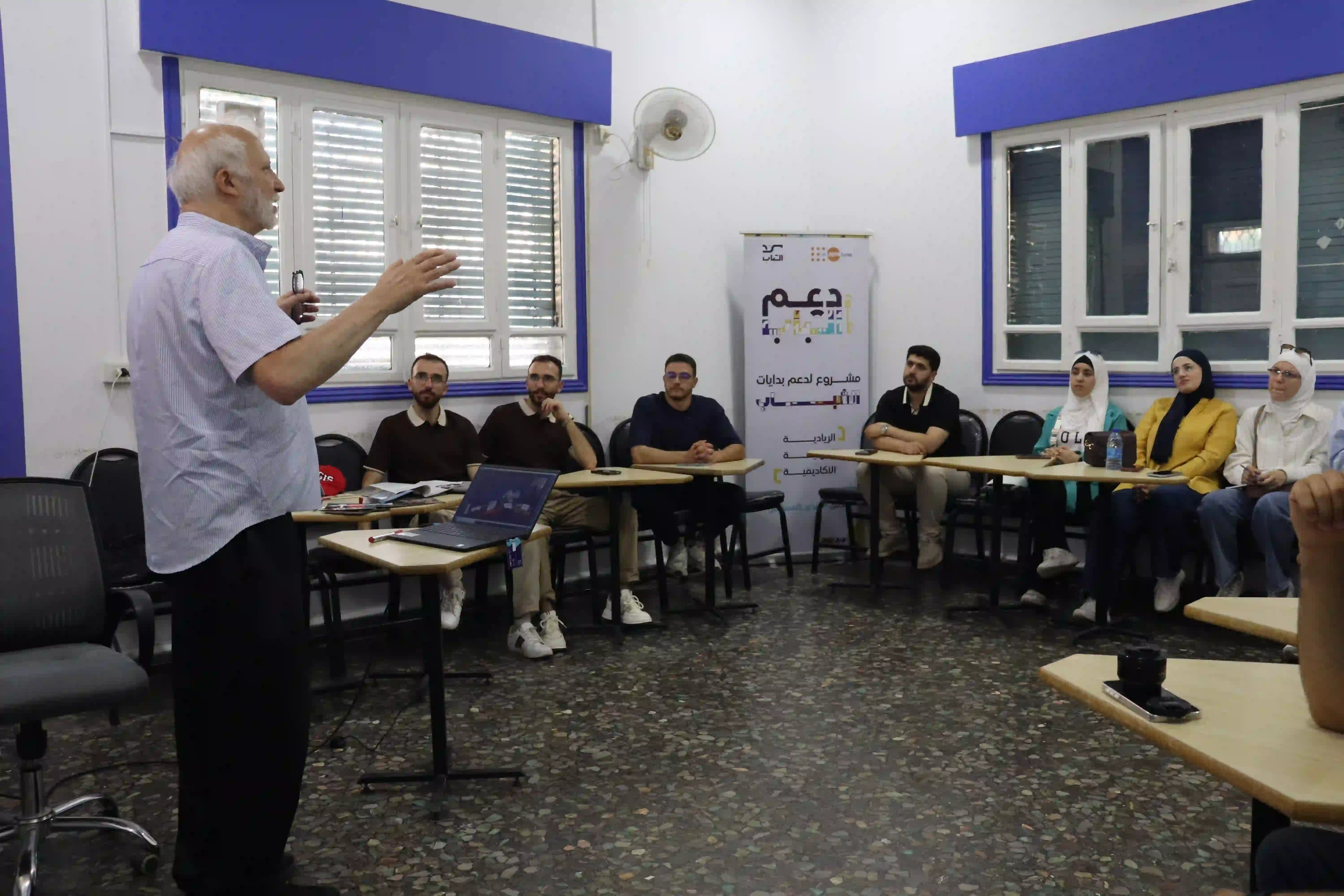
In the summer of 2025, Jusoor ran a three-day teacher training program across three Syrian towns: Zabadani, Maadamiyat al-Sham, and Harran al-Awameed, reaching 90 primary school teachers. The sessions were led by Jusoor's Head of Refugee Education, Suha Tutunji, alongside Ahmed Salameh and Jihad Qaisania, two of Jusoor's top teachers from its Lebanon centers. The training covered 21st century teaching skills including classroom management, annual and weekly planning, student-centered learning and critical thinking, and teacher wellbeing in crisis contexts.
Aziza had attended training before, from another NGO, focused on psychological support. She remembers it as theoretical, more like a philosophy course than a practical guide. "It didn't have any practical implications due to the difficulties the children and families face," she says.
Jusoor's training was different from the first session. "It was not lecturing," Aziza explains. "They used our experience to share with the group. It's about cultivating the knowledge already in the group, and then the trainers just fill the gap." That approach— open, participatory, and grounded in the reality of Syrian classrooms— gave her something she hadn't felt in a long time: confidence. "It's empowering. It gives us space to apply the ideas to our own realities."
And then she took that same approach back to her classroom.
Fatma's Full Mark
Aziza quickly found results when implementing the tools she learned from the training. Fatma, a girl who had just returned from Lebanon, was struggling with Arabic reading and writing. Before the training, Aziza admits, the instinct when a student was falling behind was to push harder, raise her voice, and apply pressure. "We usually used to yell or punish," she says simply.
This time, she tried something different. She worked with Fatma individually, tried different strategies, and stayed patient. "You need to self-regulate your own frustration," she says. "Not criticise them but encourage them and make them believe in themselves." She quickly saw the impact of the change in approach with Fatma, whose grades are improving each month.
The Little Teacher and the King
The training inspired Aziza to find creative ways to teach. She researches online, as much as the internet allows, looking for games, stories, and drama activities that bring lessons to life.
For a grammar lesson on Arabic grammatical rules, she assigned each student a character and had the class create and perform a short play together. The students learned the grammar, but they also learned cooperation, helping one another, and working as a team. “The approach allowed me to both teach the curriculum in an engaging way and also introduce positive values to the students,” she says.
For another lesson about respect and communication with people in authority, she had them perform a play about a king and reflected with them on how to treat people in positions of authority.
"The student has to love the teacher to love learning," she says.
A Difference You Can Measure
The results have shown up in ways Aziza did not entirely expect. The children's grades have improved. They are more engaged in lessons, absorbing the material more deeply, and performing better in exams. But the change has also reached beyond the classroom.
"There used to be a lot of conflict with the parents," she says. Now, drawing on the same principles of patience, understanding, and better communication that she applies with her students, she finds those conversations easier. "Changing my own approach with the children also helped them be more engaged. I also saw a difference in the children's grades after I changed my approach."
She compares last year, before the training, with this year. "I see a huge difference in the results with the children."
Jusoor's teacher training in Syria is designed not only to upskill individual educators, but to create a multiplier effect: teachers who are equipped and empowered to train others, spreading sustainable change through Syria's schools. Aziza's classroom is one place where that change has already taken root.
.webp)
.webp)